

When a raised spa water level drops after the spillway turns off, water may be moving backward through a check valve, leaking through a shell fitting, or escaping through spa plumbing. The stopping level, valve position, pump schedule, and pressure-test results help separate those possibilities.
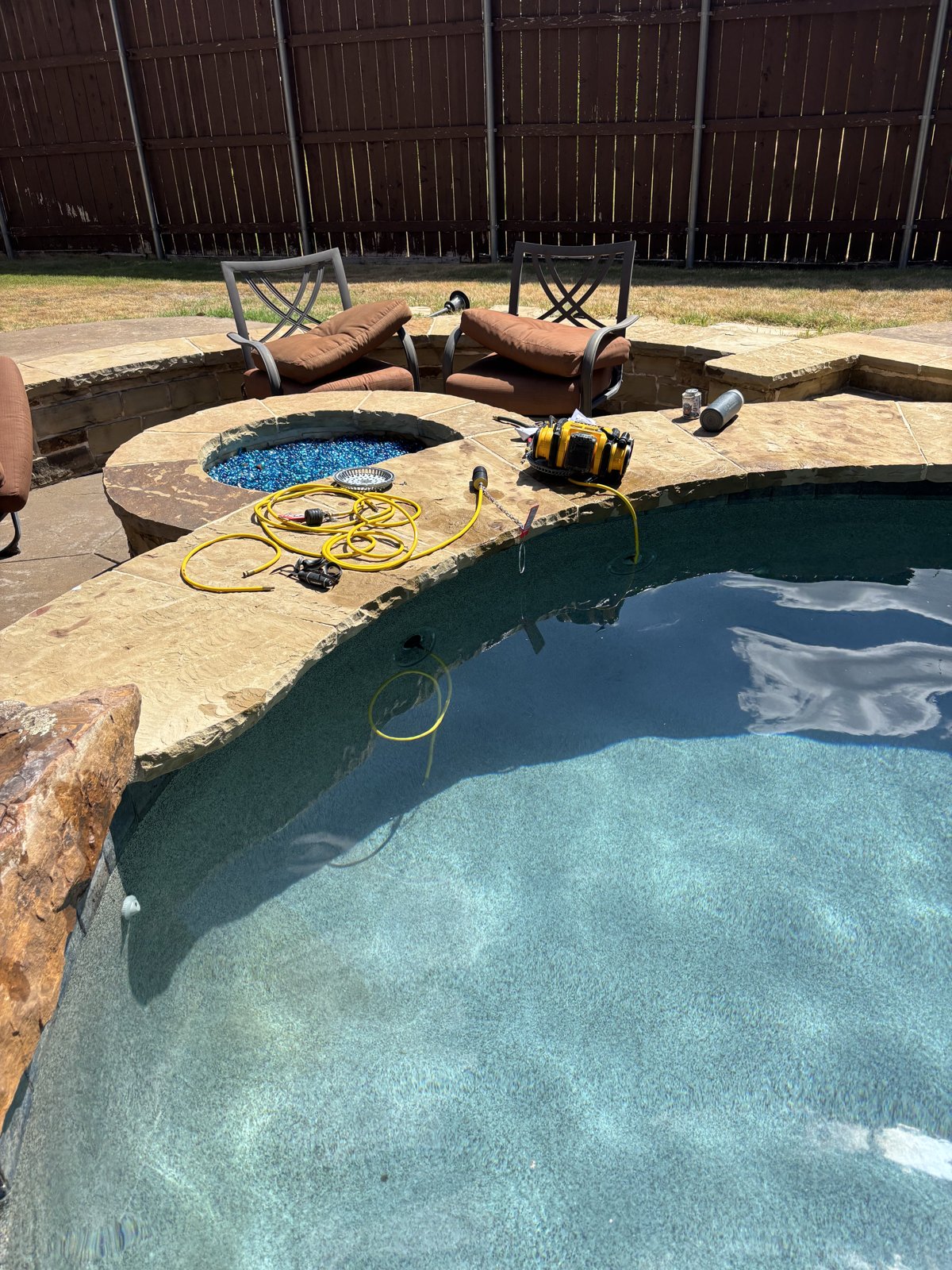
Why a raised spa can drain back
A raised spa often shares circulation equipment with the pool. When the pump stops, a check valve is intended to limit reverse flow on the return side. Debris, worn seals, incorrect valve position, or a damaged valve can allow water to move back toward the pool.
The stopping level is useful evidence
If the spa repeatedly stops at the same height, compare that elevation with jets, lights, tile joints, suction fittings, and the pool level. A stable stopping point can guide dye testing, but it does not prove the leaking component by itself.
Separate drain-back from water leaving the system
Observe whether the pool level rises as the spa drops. A matching transfer suggests internal movement between connected vessels. If the spa drops without a corresponding pool rise, shell openings, overflow paths, equipment, or buried plumbing require closer testing.
Use dye and pressure testing for different questions
Dye testing looks for water movement at a quiet, suspected shell opening. Pressure testing evaluates an isolated plumbing circuit. A line can hold pressure while a shell fitting leaks, and a clean dye test does not clear buried piping.
Check the equipment pad without assuming the answer
Inspect check valves, diverter valves, pump seals, heater connections, unions, filters, and waste lines for visible evidence. A dry pad at one moment does not rule out a leak that appears only during a particular operating mode.
DFW weather still matters
Wind, dry air, water temperature, and exposed surface area affect evaporation. EPA WaterSense identifies evaporation, leaks, cleaning, and splashing as separate pool water-loss paths. Compare the pool and spa under controlled conditions before assigning the loss to weather.
Related leak-detection resources
- Why a pool may stop losing water at one height
- What a negative pool dye test means
- Pool pump prime and leak clues
- EPA WaterSense pool water-efficiency guidance
Frequently asked questions
Can a bad check valve make the spa look like it is leaking?
Yes. Reverse flow can lower a raised spa after the pump stops, even if the water remains within the pool-and-spa system.
Should the pool level rise when the spa drains back?
It may rise slightly, but the change can be hard to see in a much larger pool. Mark both levels and observe the equipment configuration.
Why does the spa stop dropping at the jets?
The level may align with a shell opening or connected plumbing path, but elevation alone is not proof. Dye and isolation tests add context.
Can I test the check valve by closing other valves?
Changing valves can alter the system and may create confusing results. Document the original configuration and have the equipment sequence evaluated safely.
Does a bucket test work for a raised spa?
A controlled comparison can help distinguish evaporation from abnormal loss, but connected pool-and-spa plumbing and spillover schedules must remain consistent.
Can a spa shell leak only when the pump is off?
Some openings show different water movement as pressure and level change. Testing should compare both static and operating conditions.
Will pressure testing find a leaking check valve?
A buried-line pressure test and a check-valve evaluation answer different questions. The equipment path must be inspected separately.
What information should I record overnight?
Record spa level, pool level, pump schedule, valve position, autofill status, weather, and the exact time of each observation.
Schedule Lone Star Leak Locators
For slab, pool, gas, or hidden-water leak detection in the Dallas–Fort Worth area, call or text 972-333-5448.