

An appliance connector gas leak and a leak in permanent house piping require different repair scopes, but odor alone cannot reliably distinguish them. Emergency safety comes first. After the utility or emergency responder makes the area safe, documented isolation and testing can narrow the affected section.
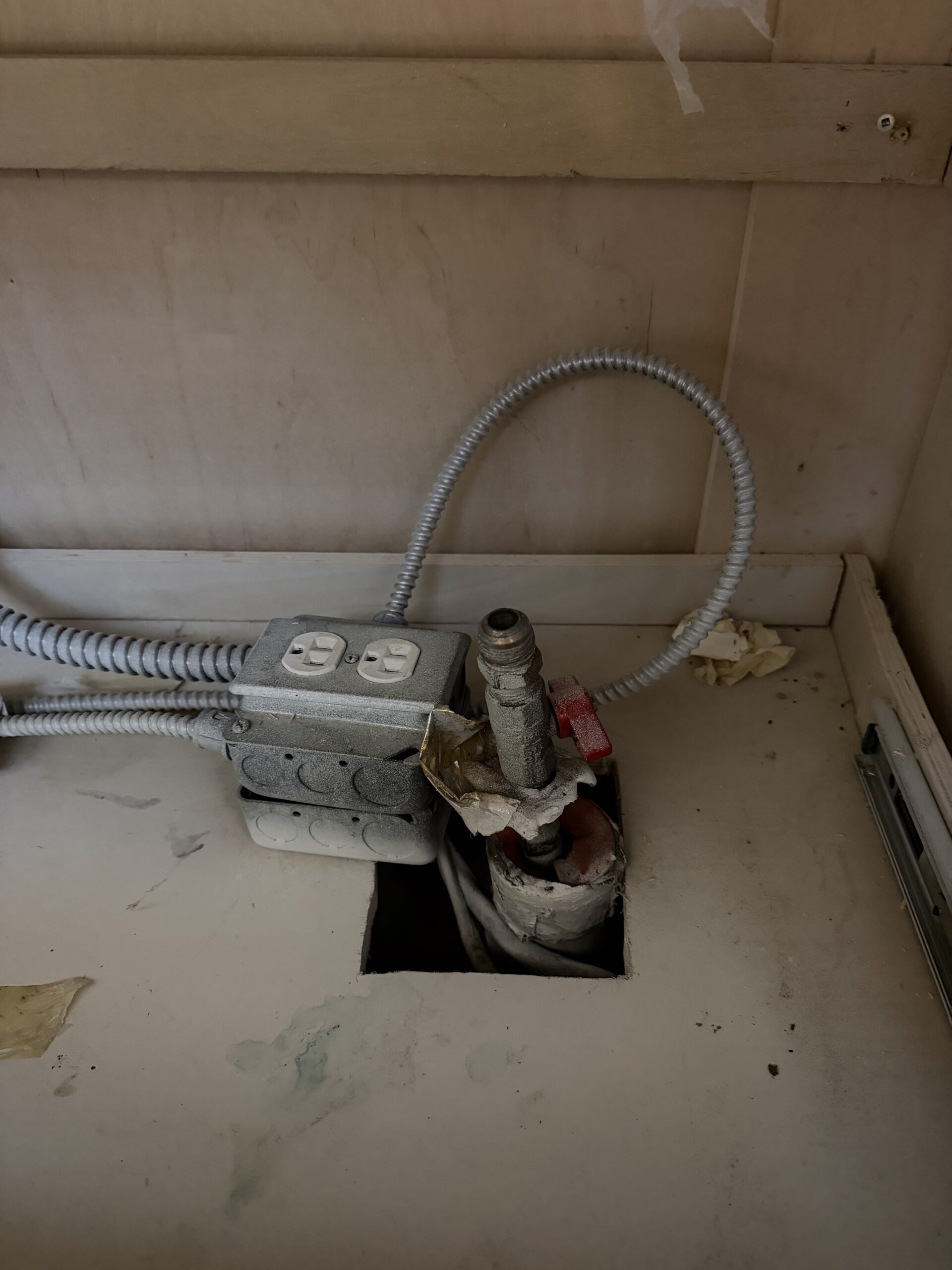
Do not isolate appliances while gas may be present
Do not walk through the house trying valves, moving ranges, relighting pilots, or reproducing the odor. A connector, shutoff, appliance control, branch line, or concealed pipe can release gas. The utility or emergency responder decides when the site is safe for further work.
What an appliance connector includes
A flexible connector typically links an appliance to an accessible shutoff and approved connection point. Damage, movement, loose joints, corrosion, or a failed component can affect that assembly. The appliance manufacturer’s requirements and applicable local rules still govern the final repair.
What house piping means
Permanent gas piping includes branches routed through walls, attics, crawlspaces, slabs, exterior areas, or underground sections. A leak in one branch may require isolation before the remaining system can be evaluated.
How pressure testing narrows the scope
A documented pressure test evaluates the isolated section included in the setup. If an appliance is excluded, the test does not clear that appliance or connector. If only one branch is tested, it does not automatically clear every other branch.
Why bubbles and electronic instruments are limited
A leak-detection solution can show gas escaping at an accessible joint under test conditions. An electronic detector samples air at a location. Neither method alone proves that hidden piping elsewhere is tight.
What happens before restoration
Repair, retesting, permits, local inspection, and utility-restoration steps depend on the jurisdiction and utility. In Plano, Allen, Dallas, Richardson, and other DFW cities, confirm the current local process rather than assuming one city’s sequence applies everywhere.
Related leak-detection resources
- Why a disappearing gas odor is not clearance
- What a failed gas pressure test means
- Limits of a soap-bubble gas check
- Atmos Energy gas-emergency instructions
- Railroad Commission of Texas gas-leak notice
Frequently asked questions
Can I tighten an appliance connector if I smell gas?
No. Leave the area and follow utility emergency instructions. Do not attempt a repair while gas may be present.
Does shutting an appliance valve prove the connector was leaking?
No. A change in odor is not a controlled test. The connector, valve, appliance, and branch need an appropriate documented evaluation.
Can a pressure test include the appliance?
Test configurations vary, and appliances are commonly isolated from elevated-pressure testing. The written scope should state exactly what was included.
Does a passing house-piping test clear every connector?
Not if connectors or appliances were excluded. A passing result applies only to the tested section and conditions.
Can electronic gas detection locate an underground leak?
It may detect gas at accessible sampling points, but soil, wind, paving, depth, and migration paths affect results. Other methods may be needed.
Why might the gas meter remain locked after a repair?
The utility may require documentation, inspection, or a defined restoration process before service returns.
What if the odor disappears before help arrives?
Remain in a safe location and report what happened. A fading odor does not prove the system is safe.
What should the final documentation say?
It should identify the test scope, isolated branches, pressure and duration used, observed leak points, completed repair, retest result, and remaining limitations.
Schedule Lone Star Leak Locators
For slab, pool, gas, or hidden-water leak detection in the Dallas–Fort Worth area, call or text 972-333-5448.