

If a gas odor disappeared, a leak may still be present. Air movement can disperse odorant, people can become less sensitive to a continuing smell, and some underground conditions can reduce what reaches the occupied space.
Why a gas odor disappeared
Natural gas is odorized so people can recognize a leak, but smell is not a measuring instrument. Ventilation, open doors, HVAC airflow, weather, soil, and the location of the release can change how strongly odor reaches you. A person can also become accustomed to an odor after exposure.
A valve or appliance may cycle. That can make odor appear during operation and fade later. The absence of smell at one moment does not prove the piping is tight.
Do not search while the area may be unsafe
Do not walk room to room using your nose, turn equipment on to reproduce the odor, or use an open flame. Leave first. Emergency responders and the utility decide when entry and further work are safe.
The Railroad Commission of Texas public gas-leak notice likewise directs people who smell natural gas to leave immediately and avoid lights, appliances, and phones in the affected area.
What professional detection can establish later
After the emergency is controlled, a licensed professional may examine accessible piping, valves, connectors, appliance branches, exterior piping, and meter-side conditions within the permitted scope. Electronic instruments can sample air at specific points. Pressure testing can evaluate isolated piping. Tracer methods may help with buried sections when appropriate.
No single method answers every question. The result should state which section was tested and what limitations remain.
Why “I cannot smell it now” is not a pass
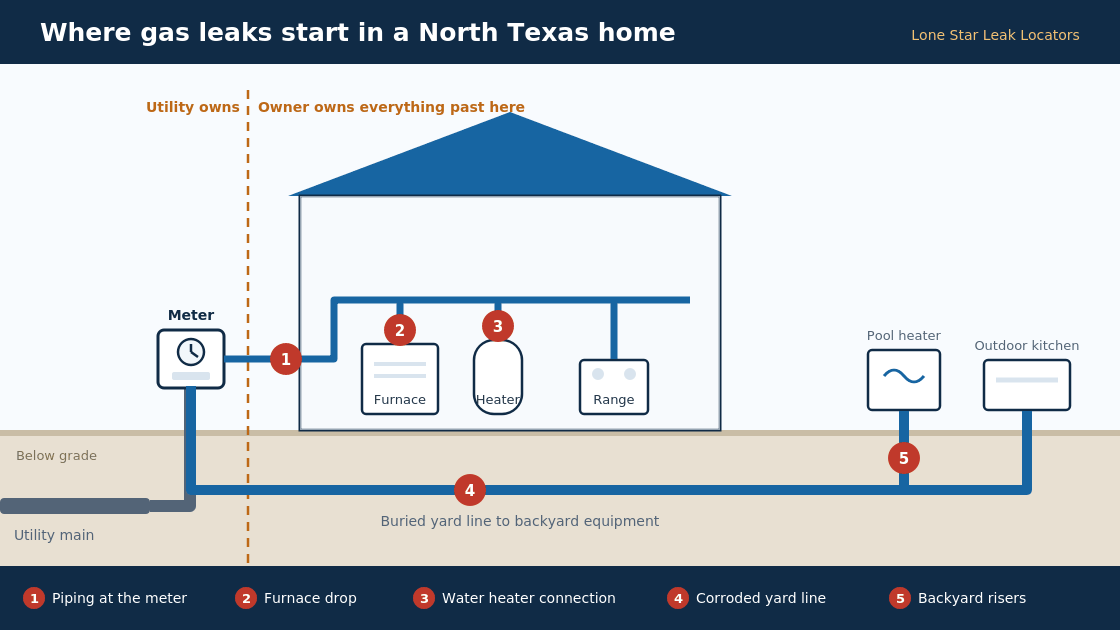
Odor strength does not measure leak rate. A small leak near an ignition source can be serious. A larger leak outdoors may be hard to smell depending on wind. Underground gas can travel through soil or utility pathways before appearing away from the break.
What to document from a safe location
Note when the odor began, where you first noticed it, whether an appliance had started, whether construction or digging occurred nearby, and whether anyone experienced symptoms. Do not re-enter to gather details. Give the information to emergency responders and the utility.
What happens after the emergency response
- The utility or emergency responder addresses immediate safety.
- The affected system may remain off until the required repair process is complete.
- A licensed professional identifies the permitted test scope.
- Accessible branches are isolated and evaluated.
- The verified leak point is documented for repair.
- The system is retested after repair.
- Local inspection and utility-restoration steps are completed.
What a useful leak-location visit should document
A sound investigation separates observations from conclusions. The written findings should identify what was tested, what held, what did not, which access points were used, and what limited the work. Equipment such as pressure gauges, thermal imaging, acoustic listening devices, tracer tools, or electronic line locators should support a conclusion rather than replace one.
Lone Star Leak Locators serves homeowners in Plano, Allen, Frisco, Richardson, McKinney, and nearby North Dallas communities. The goal is to narrow the problem before repair access begins. Call or text 972-333-5448 if you need help deciding which test fits the evidence at your property.
Related resources
- Gas leak detection and written findings
- Limits of a soap-bubble gas check
- What a failed gas pressure test means
- Explore Lone Star Leak Locators services
Frequently asked questions
Can I go back inside if the smell is gone?
Wait for the utility or emergency responder to say the area is safe. A fading odor is not clearance.
Can HVAC airflow move the odor?
Yes. Air movement can spread or dilute odor, which is another reason smell cannot locate the source.
Can underground gas appear inside later?
Gas can move through soil and openings. Report outdoor or indoor indications to the utility from a safe location.
Should I shut the gas valve myself?
Do not delay evacuation or take a risky action. Follow the utility’s emergency instructions.
Can an electronic detector find every leak?
No device guarantees every hidden leak. Instruments, isolation, pressure testing, and access must fit the system.
Why might the utility lock the meter?
The utility may shut service when it identifies or suspects an unsafe condition. Restoration follows its process.
Does a passing appliance check clear the piping?
Not necessarily. The test scope must include the section in question and be documented.
What if someone feels dizzy or sick?
Move to fresh air, call 911, and seek medical guidance. Do not re-enter the suspected area.
Schedule professional leak detection
Call or text 972-333-5448, or use the secure scheduling page below.