

When the pool water level stops dropping at a repeatable height, the elevation can help narrow the investigation. It does not automatically prove that the nearest skimmer, return, light, crack, or pipe is leaking.
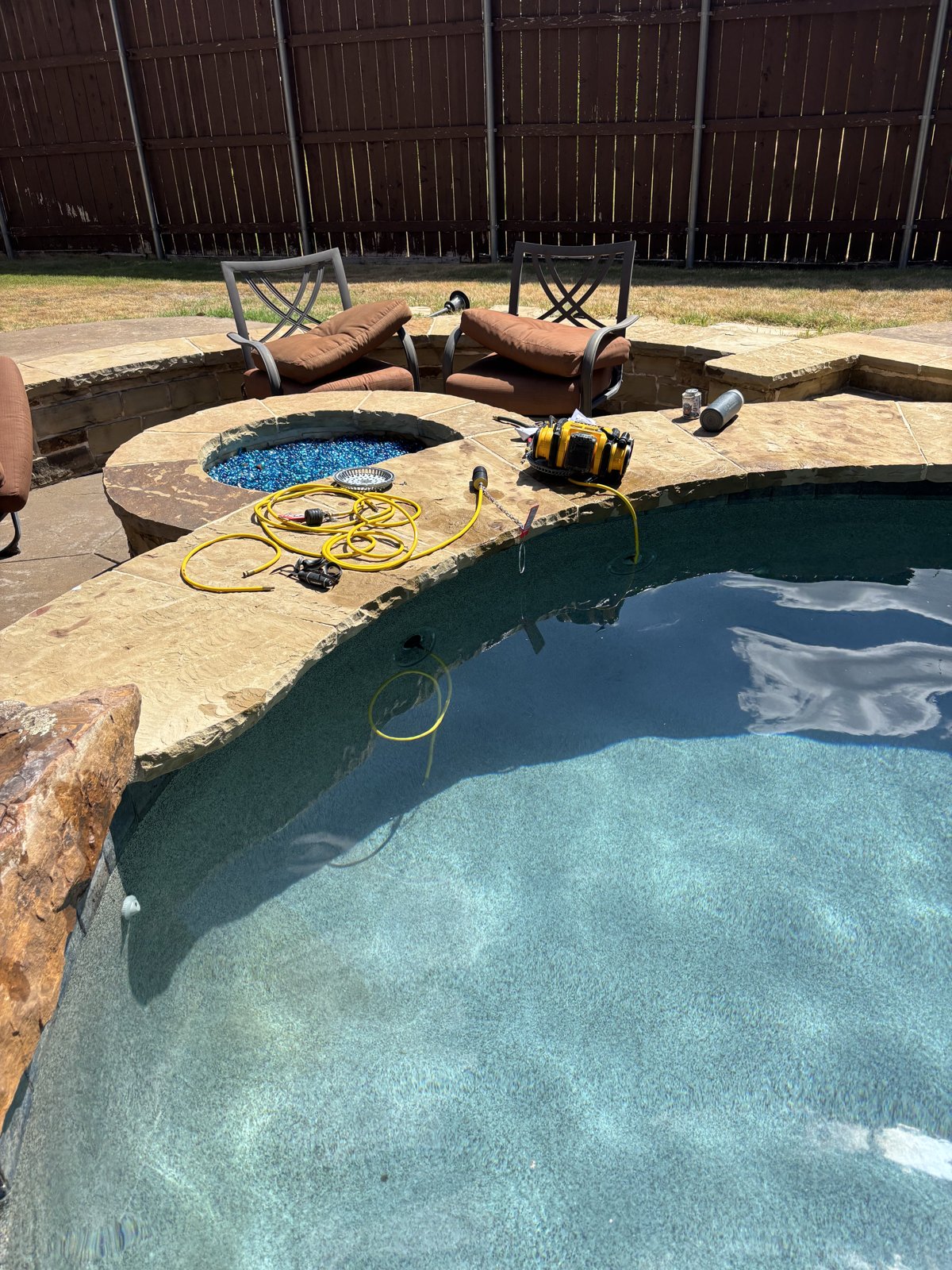
Why a pool water level stops dropping
A shell opening can stop leaking after the water falls below it. A skimmer throat, light conduit, return fitting, tile-line crack, or spa connection can create that pattern. However, underground plumbing can behave differently. A pressure-side line may leak only while the pump runs, even after the static water level stabilizes.
Evaporation also continues at every level. The stabilized mark must be compared with weather and a bucket test before it becomes a useful leak clue.
Mark the exact elevation
Use tape or a grease-pencil mark at the water line. Record the date, pump condition, autofill setting, recent rain, wind, and temperature. If the level stops at the same point more than once, compare that line with the bottom of the skimmer mouth, returns, lights, spa spillway, and visible cracks.
Do not let the pool fall below the safe operating level for the pump or finish. Turn equipment off when water is too low for safe circulation.
Use a bucket test before diagnosing a fitting
A bucket test compares pool loss with evaporation under the same conditions. The City of Tampa Water Department’s pool-leak guidance describes placing a weighted bucket in the pool, marking both levels, turning off automatic refill equipment, and comparing the changes later.
If the pool and bucket fall equally, evaporation may explain the change. If the pool falls farther, continue with focused testing.
Dye-test every opening at that height
Still water is essential. Release a small amount of pool-safe dye near a suspect point without forcing it. Watch for a consistent pull. Test the entire skimmer throat, faceplate, gasket area, light niche, return fitting, and crack—not one convenient spot.
A negative dye test rules out only what was tested under those conditions. It does not clear buried lines.
Compare pump-on and pump-off behavior
If loss accelerates with the pump running, pressure-side plumbing or equipment becomes more relevant. If it accelerates with the pump off, suction-side or shell conditions may deserve attention. These patterns guide pressure testing; they are not final proof.
Pressure-test plumbing by line
Plug and evaluate each accessible return, skimmer, drain, spa jet, or feature line separately. A combined test can confirm that something leaks but may not identify which pipe. Once a line fails, acoustic listening and route tracing can narrow the location before repair access.
A disciplined pool-level investigation
- Disable autofill and mark the pool and bucket levels.
- Record pump condition and weather.
- Identify every opening at the stabilized elevation.
- Dye-test the shell and fittings in still water.
- Compare pump-on and pump-off loss.
- Pressure-test related plumbing one line at a time.
- Trace and listen along only the line that fails.
What a useful leak-location visit should document
A sound investigation separates observations from conclusions. The written findings should identify what was tested, what held, what did not, which access points were used, and what limited the work. Equipment such as pressure gauges, thermal imaging, acoustic listening devices, tracer tools, or electronic line locators should support a conclusion rather than replace one.
Lone Star Leak Locators serves homeowners in Plano, Allen, Frisco, Richardson, McKinney, and nearby North Dallas communities. The goal is to narrow the problem before repair access begins. Call or text 972-333-5448 if you need help deciding which test fits the evidence at your property.
Related resources
- What to do when a pool dye test finds nothing
- How pool autofill can hide ongoing loss
- Pool leak detection in North Dallas
- Explore Lone Star Leak Locators services
Frequently asked questions
Does a stable water level prove the skimmer leaks?
No. The elevation is a clue. The skimmer, nearby fittings, shell, and connected plumbing still require testing.
Should I let the pool keep dropping?
Do not allow unsafe pump operation or expose finishes beyond manufacturer guidance. Mark the level and arrange testing.
Can a return line leak below the stabilized level?
Yes. A pressure-side line may leak mainly when the pump runs, so static level alone may not reveal it.
Why repeat the bucket test?
Changing wind, rain, temperature, and pump operation can affect one observation. Repetition helps separate weather from a repeatable loss.
Can dye miss a slow leak?
Yes. Water movement, poor access, a buried defect, or a very small opening can make dye inconclusive.
What if the pool stops at the light height?
Inspect and dye-test the niche, conduit area, gasket, and nearby shell, but do not assume the light is the source without evidence.
Will pressure testing damage the pool lines?
A qualified tester chooses a controlled method appropriate to the system and stops if the condition makes testing unsafe.
What should the final report show?
It should list the shell areas and lines tested, the results, the located area, and any access or visibility limits.
Schedule professional leak detection
Call or text 972-333-5448, or use the secure scheduling page below.