

Lone Star Leak Locators · Pool leak detection and diagnostic guidance · Updated September 2026
QUICK ANSWER
Yes, pool autofill can hide a leak. The waterline may look normal because fresh water is replacing ongoing loss. A useful investigation tracks added water, accounts for evaporation and pool use, checks the fill and overflow systems, and tests the shell, fittings, equipment, and plumbing in defined sections before any repair is selected.
A swimming pool can remain visually full while using far more water than expected. When an automatic fill valve adds water without drawing attention, the homeowner may never see the level fall. That makes the autofill history part of the diagnostic evidence—not a side detail.
Autofill does not reveal the cause. Water can leave through normal evaporation, swimmer activity, maintenance, an overflow, a malfunctioning fill system, the pool shell, a fitting, equipment, or buried plumbing. The goal of professional leak detection is to separate those possibilities in a controlled sequence and document what each test can and cannot establish.
Schedule a Pool Leak Evaluation
Tell Lone Star Leak Locators that the pool has an autofill system and describe any change in water use.
Call 972-333-5448Why a Full Pool Can Still Be Losing Water
An autofill valve responds to a water level or float position and restores water as the level drops. If replacement water arrives as quickly as water leaves, the waterline can appear steady. The more useful questions are how often the valve operates, how much water it adds, and whether the pattern changed from normal.
A fill valve can also become part of the problem. If it does not shut off correctly, water may continue entering and then leave through an overflow path. That is different from a leak in a return line, suction line, shell, skimmer, spa connection, or equipment component. A technician should evaluate the fill and overflow behavior without assuming either one explains the entire loss.
What to Record Before the Appointment
Write down when you first noticed unusual filling, whether the valve runs at predictable times, and whether the pattern changes with the circulation pump on or off. Include rainfall, hot or windy weather, heavy pool use, backwashing, filter cleaning, splash-out, and any recent service that intentionally removed or added water.
Compare water bills using similar billing periods and note all other property uses, including irrigation, guests, construction, softeners, and household leaks. A whole-property meter records combined use; it does not automatically assign increased flow to the pool. If the pool fill has a dedicated meter, preserve those readings.
Photograph the waterline at the same reference point and record the time. Do not drain the pool to see where the loss stops. Do not block an overflow, defeat an autofill control, or operate the pump below its required water level. Ask a qualified pool professional how to create a safe observation for the particular system.
How a Professional Pool Leak Evaluation Is Organized
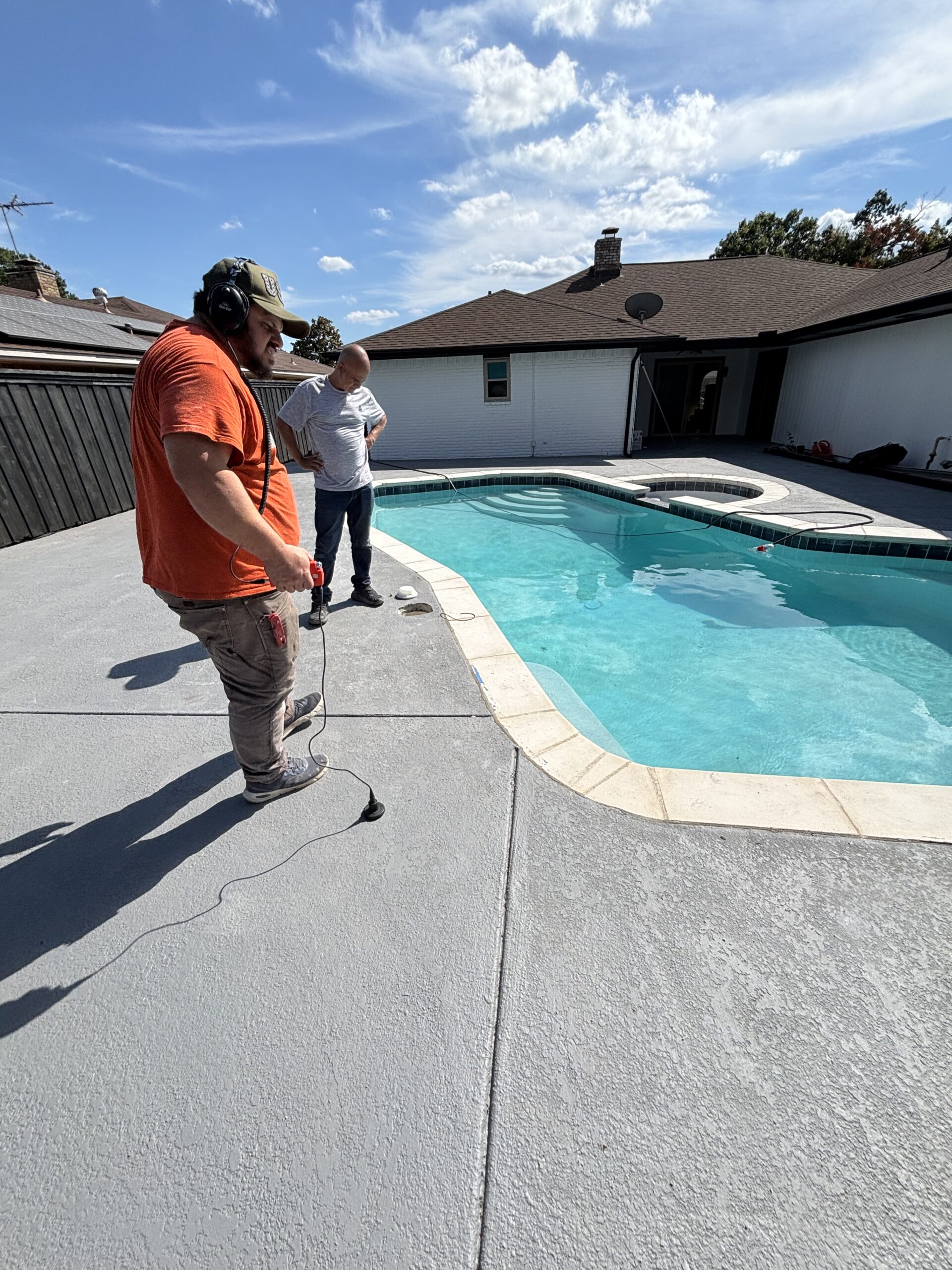
A clear scope divides the pool into systems that can be evaluated meaningfully: the shell and visible penetrations, skimmer, pool returns, main drains, spa suction and returns, equipment pad, water features, autofill, overflow, and connecting plumbing. Not every property has every component, and not every component is accessible under the same conditions.
Visual inspection looks for active water, staining, cracks, failed seals, and equipment leaks. Dye observation can help evaluate movement near a suspected accessible point when the water is still. Pressure testing can evaluate whether an isolated plumbing section holds the chosen test condition. Electronic listening may help compare sound at surface locations. Each method answers a narrower question than “Where is every leak?”
Results should be tied to the section tested. A line that holds under the test conditions is evidence about that line, not proof that the entire pool is leak-free. A line that does not hold indicates a problem within the isolated section, but pressure loss alone does not always identify the exact point to excavate.
What Our Gen-Ear LE “Geo Phone” Can and Cannot Show
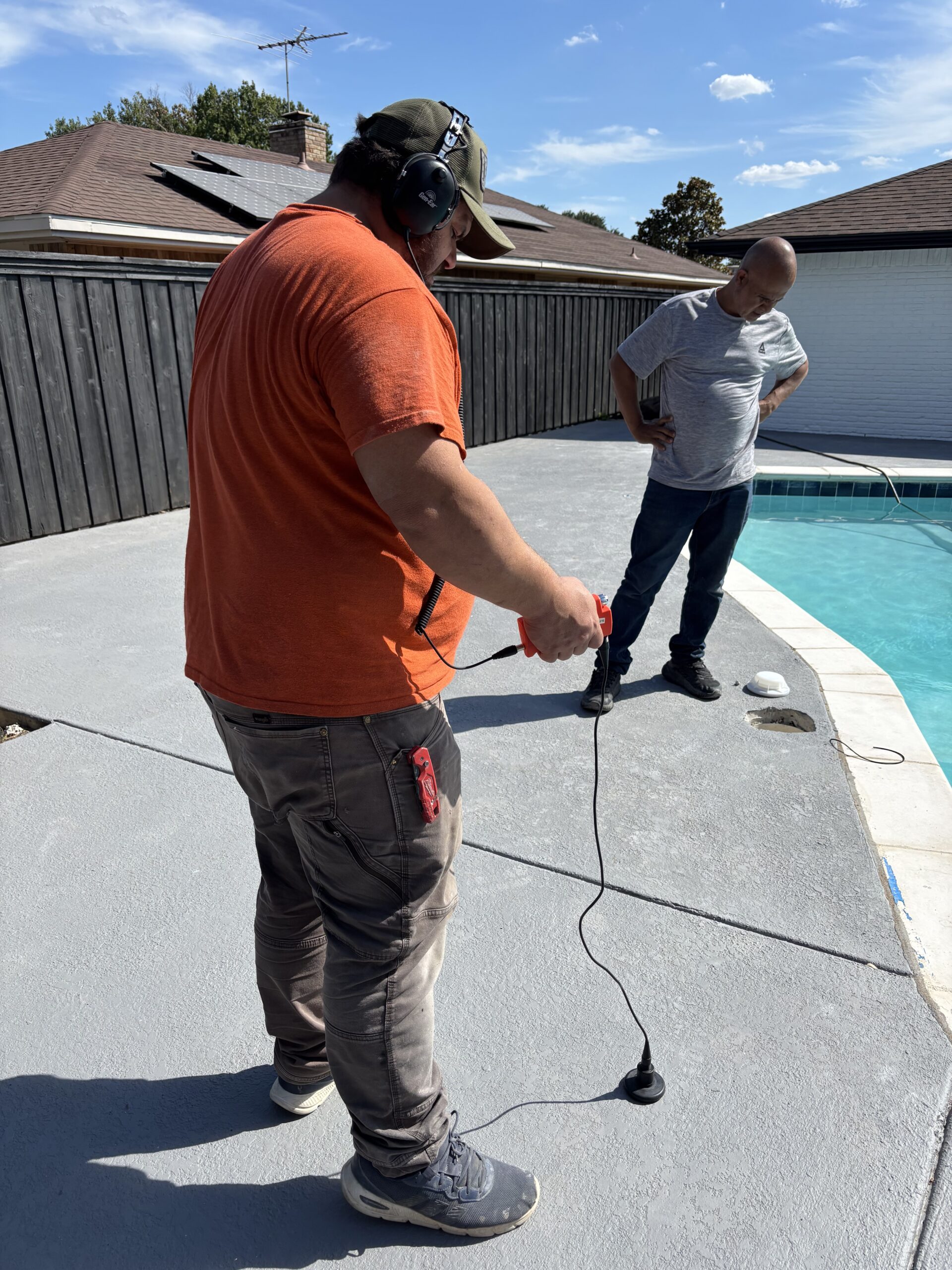
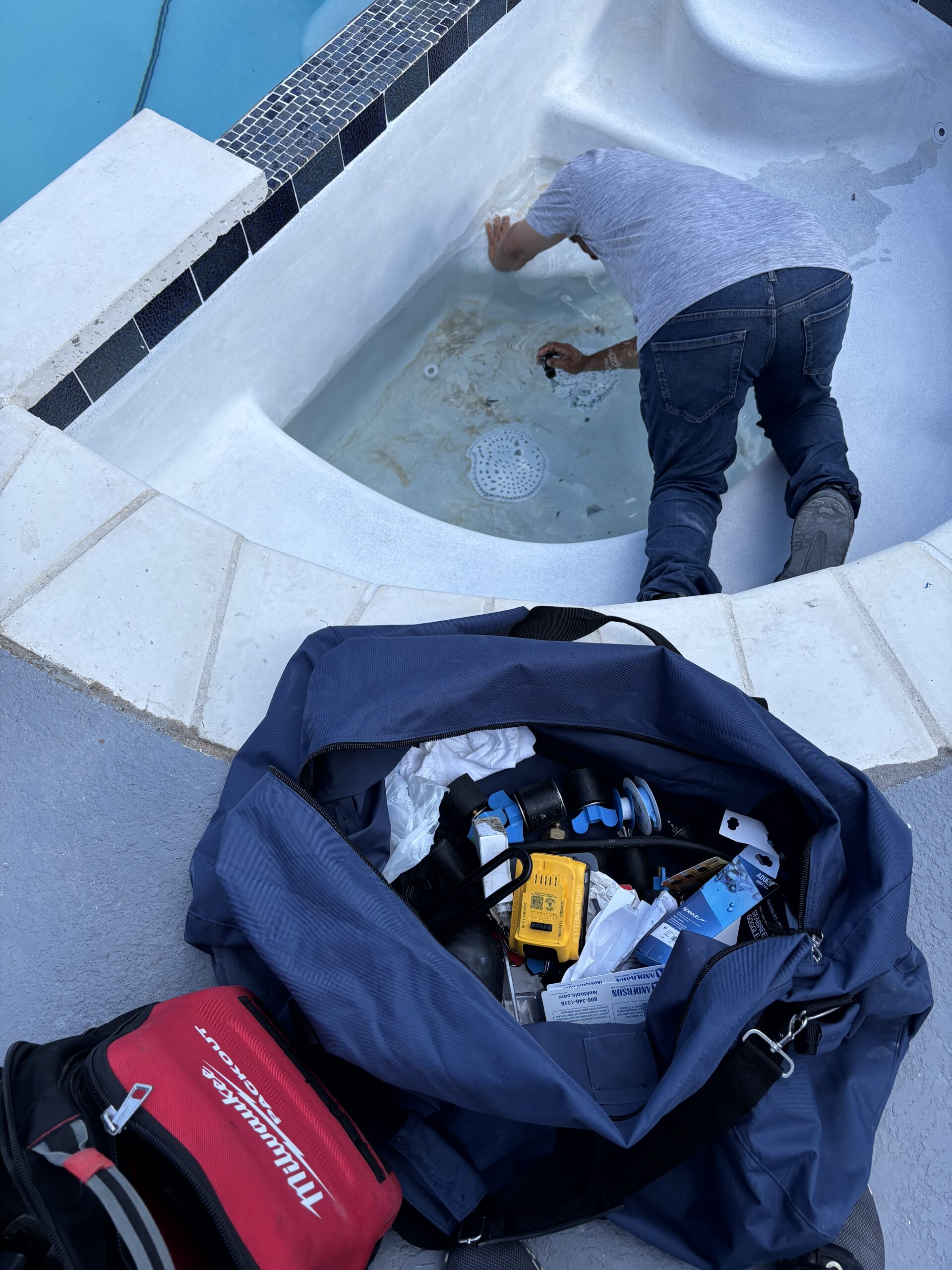
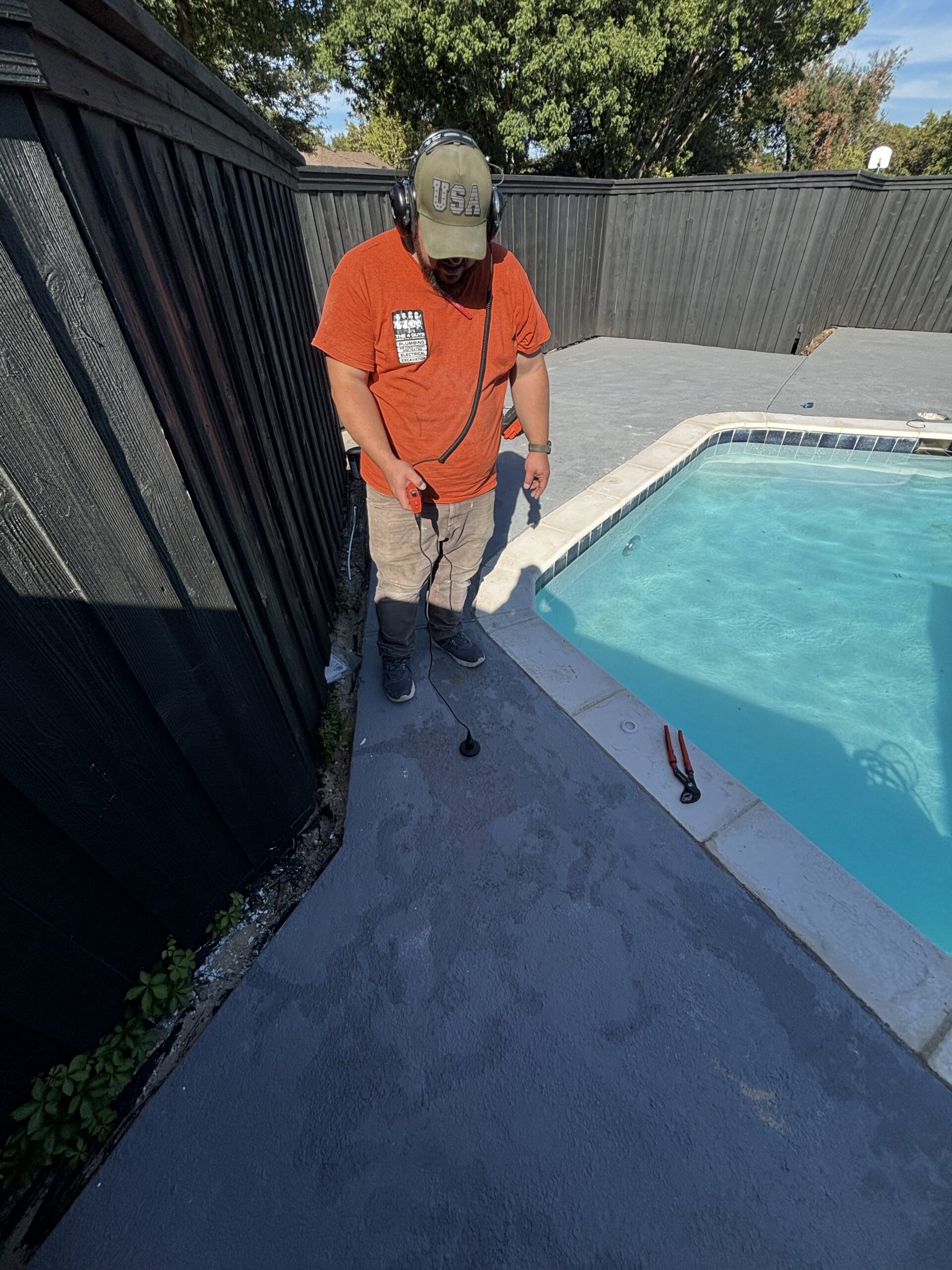
Lone Star Leak Locators uses the General Wire Gen-Ear LE™ Water Leak Location System—often described in the field as a “Geo Phone”—as one part of an acoustic leak-location process. The manufacturer, General Pipe Cleaners, describes the system as using an amplifier, noise-canceling headphones, preset audio filters, and interchangeable sensors for comparing leak sounds through hard surfaces, soft surfaces, and accessible piping. Its ground sensor is designed to listen through materials such as concrete and tile, which can make it useful when pool plumbing is routed beneath a deck. See the manufacturer’s Gen-Ear LE product information.
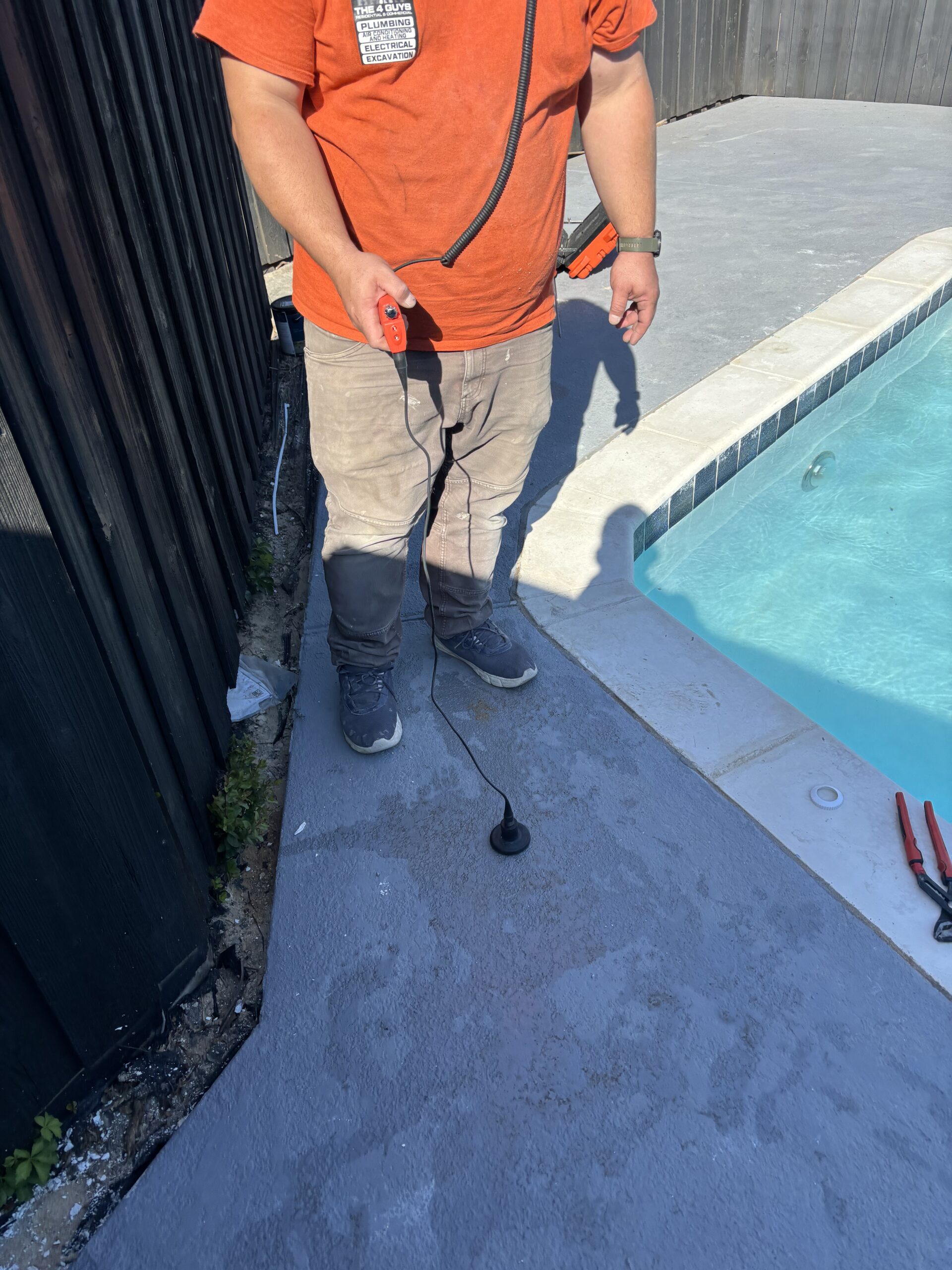
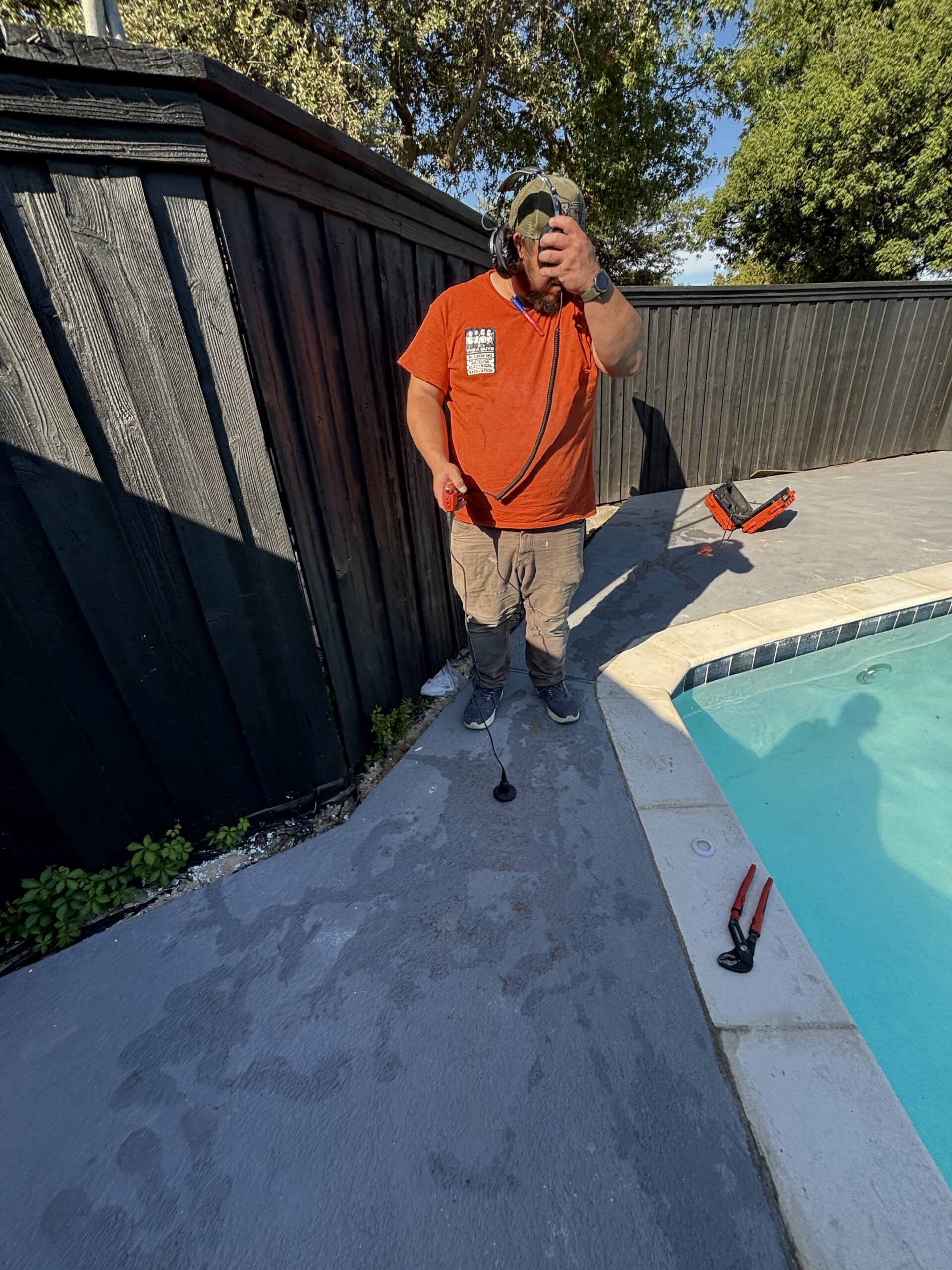
During a pool evaluation, the technician can place the Gen-Ear LE ground sensor at selected deck locations and compare the acoustic response while considering the suspected plumbing route and the results of line isolation or pressure testing. The goal is to narrow a search area with multiple pieces of evidence—not to treat one sound as automatic proof of an exact underground point.
Acoustic conditions matter. Deck material, soil, line depth, the size and pressure of the leak, circulating equipment, traffic, wind, and other water sources can change what reaches the sensor. A strong response may guide the next step, but the loudest point is not necessarily the center of a buried failure. A quiet reading is not a universal guarantee that a line is sound.
The Gen-Ear LE also includes probe and magnet options intended for different surfaces and accessible pipe components. Which attachment is useful depends on the site and the part of the system being evaluated. Any air-assisted method requires controlled professional setup appropriate to the isolated line; it is not a homeowner procedure and should never be used as a substitute for knowing the safe test conditions of the pool plumbing.
This is why a written report should identify the section tested, the test condition, where acoustic comparisons were made, relevant limitations, and whether selective access is recommended. The repair contractor then receives a defensible starting area rather than an unsupported guess.
Autofill, Evaporation and Controlled Water-Level Comparisons
Evaporation changes with temperature, wind, humidity, sunlight, water temperature, covers, and features. A simple comparison container can help provide context, but it does not test buried plumbing or every pool component. The observation also becomes unreliable when autofill, rainfall, draining, splash-out, or maintenance is not tracked.
The U.S. Environmental Protection Agency’s WaterSense materials discuss pool water efficiency, automatic refilling, covers, maintenance, and avoiding water waste. These resources are helpful background, but they do not replace property-specific testing. Use the current EPA WaterSense program as an educational reference.
If the pool is losing water, the test plan should protect finishes and equipment. Rapid or extensive draining can create separate risks. The professional should explain which equipment can run, which valves will be operated, whether the autofill will be controlled, and how the water level will be monitored.
How to Read the Final Findings
Ask the report to list the pool and spa systems evaluated, the methods used, the conditions during testing, and any excluded or inaccessible components. Observations should be separated from conclusions. For example, “pressure decreased in the isolated return section” is more useful than a general statement that the pool leaks.
If a repair is recommended, request the evidence supporting the target area and the limits of that location. Buried lines can change direction, pass beneath structural elements, or share routes with other systems. The repair proposal should address access, affected surfaces, plumbing repair, testing after repair, and restoration responsibilities.
Do not treat every photograph as proof of a leak. Photos can document equipment setup, testing locations, a visible defect, or a proposed repair point. Their caption should explain what the image actually shows and avoid claiming that a completed job or confirmed result is visible when it is not.
Compare the Main Diagnostic Steps
| Step | What it can add | Important limitation |
|---|---|---|
| Fill and water-use history | Shows whether replacement-water demand changed | Does not identify the loss location |
| Visual and dye observation | Evaluates accessible shell points and fittings | Water movement and access affect results |
| Line isolation and pressure testing | Evaluates a defined plumbing section | Does not automatically pinpoint excavation |
| Electronic listening | Compares surface locations for acoustic evidence | Noise, depth, deck and soil affect interpretation |
| Selective access and repair | Directly exposes a supported target area | Needs written boundaries and restoration plan |
Questions to Ask Before Approving a Repair
- Which pool or spa section was isolated and tested?
- What evidence connects the test result to the proposed access area?
- How was autofill activity controlled or documented?
- Which systems remain untested or inconclusive?
- Will the repair require deck, coping, landscaping, or equipment access?
- Who restores each affected surface?
- How will the repaired section be retested?
- What happens if the opening does not reveal the expected condition?
Pool Autofill and Leak Detection FAQs
Can a pool leak while the waterline stays steady?
Yes. An automatic fill valve can replace water at roughly the same time it is being lost, so the visible level may remain steady. That does not identify where the water is going. Record fill activity, weather, pool use, and service events, then ask for a controlled evaluation that accounts for added water.
Does frequent autofill prove an underground plumbing leak?
No. Frequent filling can be associated with evaporation, splash-out, maintenance, an overflowing pool, a fill-valve problem, a shell or fitting leak, or a plumbing-line leak. The investigation should separate added water from water leaving the pool and then test the relevant components before excavation is considered.
Can the autofill valve itself waste water?
Yes. A valve that does not shut off correctly may continue adding water, and excess water may leave through an overflow or another route. The fill assembly and overflow behavior should be evaluated as part of the larger water-loss question. Replacing the valve does not repair an unrelated pool leak.
Should I turn the autofill off overnight?
Only after receiving instructions appropriate for the pool and its equipment. A useful observation must account for rainfall, water use, pump operation, evaporation, and safe equipment water levels. Do not defeat protective controls, block an overflow, or operate equipment outside manufacturer requirements to create a test.
What information should I collect before the appointment?
Record the normal waterline, dates and times of noticeable filling, recent water bills, rainfall, pool use, maintenance, backwashing, equipment changes, and prior repairs. Tell the office about the autofill and any dedicated fill meter. Photographs at consistent points can help document patterns without claiming a diagnosis.
Can a household water meter show that the pool is leaking?
A meter can show that water is flowing when all expected uses are off, but a whole-property meter usually includes household, irrigation, and pool water. It cannot assign the flow to the pool by itself. Isolation, dedicated metering, or additional testing may be needed to separate systems.
What is electronic listening used for around a pool?
Electronic listening equipment may be used to compare sounds at selected accessible locations when a pressurized line is under appropriate test conditions. Background noise, deck construction, soil, depth, and more than one water source can affect interpretation. Listening is one part of an evidence-based process, not an automatic pinpoint.
Does pressure testing locate the exact place to dig?
Not by itself. A pressure test can indicate whether an isolated section holds the test condition, but it does not automatically identify the precise failure point. Additional locating, listening, dye observation, visual inspection, or selective access may be necessary before a repair area is chosen.
Can dye testing find every pool leak?
No. Dye can help evaluate water movement near a suspected shell fitting, crack, light niche, skimmer, or other accessible area when conditions are controlled. It is not a test for every underground line, and currents can move dye. The technician should explain the component and conditions being evaluated.
Why test more than one pool system?
A pool can lose water through the shell, penetrations, skimmer, spa connections, equipment, suction plumbing, return plumbing, features, or fill and overflow systems. Testing is organized by component so a result applies to a defined section. Clearing one section does not automatically clear every other section.
Will the pump being on or off change the symptoms?
It can. Some losses appear or increase only when a line is under pressure, while others may be more visible when circulation stops. Equipment leaks can also change with operation. Tell the technician whether the water-loss pattern changes with the pump so the test plan can account for that observation.
How long does pool leak detection take?
Time depends on pool complexity, access, water level, number of circuits, equipment condition, and whether symptoms are intermittent. A simple system can require fewer test stages than a pool with a spa, multiple drains, features, autofill, and several returns. Ask which components are included and what conditions could require a return visit.
How much does pool leak detection cost?
A reliable price requires a defined testing scope. Pool and spa configuration, number of isolated lines, access, diagnostic time, equipment condition, and return visits can affect the total. Ask for a written description of included systems, time allowance, deliverables, and the rate or approval process for additional work.
What should the written findings include?
Request the systems evaluated, test method, conditions, observations, limitations, and recommended next step. Photographs should be labeled as documentation, not treated as proof beyond what they show. If repair is proposed, ask for the evidence supporting the location and a separate written repair scope.
Should testing and repair be separated?
They can be. Separating diagnosis from excavation helps the homeowner review the evidence before destructive work. If the same company performs both, ask for a clear transition: written findings first, then the proposed repair boundary, access plan, price, restoration responsibilities, and change-order procedure.
Helpful Lone Star Leak Locators Resources
About Lone Star Leak Locators
Lone Star Leak Locators provides diagnostic guidance for slab, pool, gas, and water leak concerns in North Texas. Call 972-333-5448 to discuss the property, the systems involved, prior testing, and the written findings you need.
Call to Schedule Your Pool Leak Evaluation
Mention the autofill system and any change in water use so the testing scope can be discussed.
Call 972-333-5448 Schedule Online