

When a pool pump loses prime, the system is drawing air or lacks enough water to maintain a continuous flow. A pool leak is one possibility, but the cause may also be at the lid, valves, fittings, skimmer level, or equipment pad.
Why a pool pump loses prime
A pump needs a sealed suction path and enough water at the skimmer. Air can enter through a loose lid, damaged lid seal, drain plug, valve stem, fitting, cracked equipment, or suction pipe. Low pool level and a sticking skimmer weir can also let the skimmer gulp air.
An underground suction-line defect becomes more likely after accessible equipment and water-level causes are ruled out.
Stop before the pump runs dry
A dry pump can overheat and damage seals or other components. Shut it off if the basket will not remain full or water circulation stops. Do not repeatedly restart it simply to reproduce the symptom.
Inspect the equipment pad first
Look for an empty or partly filled basket, bubbles returning to the pool, moisture around fittings, damaged seals, and valves that change the symptom. These observations should be made without reaching into moving equipment or opening a pressurized filter.
Some air leaks on the suction side pull air inward while the pump runs and may drip water only after the pump stops. That is why a dry equipment pad does not clear the fittings.
Check the pool level and skimmer
Water should remain at the normal operating level. A low level, blocked basket, stuck skimmer door, or vortex can introduce air. If the level is also falling faster than evaporation, perform a bucket comparison. The City of Tampa’s official pool-leak guidance explains the bucket method and turning off refill equipment during the comparison.
Isolate suction sources
Many pools draw from more than one skimmer, a main drain, or a spa. Valve positions can isolate one source at a time. If prime holds on one line and fails on another, the search area becomes smaller.
Do not force old valves or create unsafe suction conditions. A professional should choose the correct setup for the system.
When pressure or vacuum testing is useful
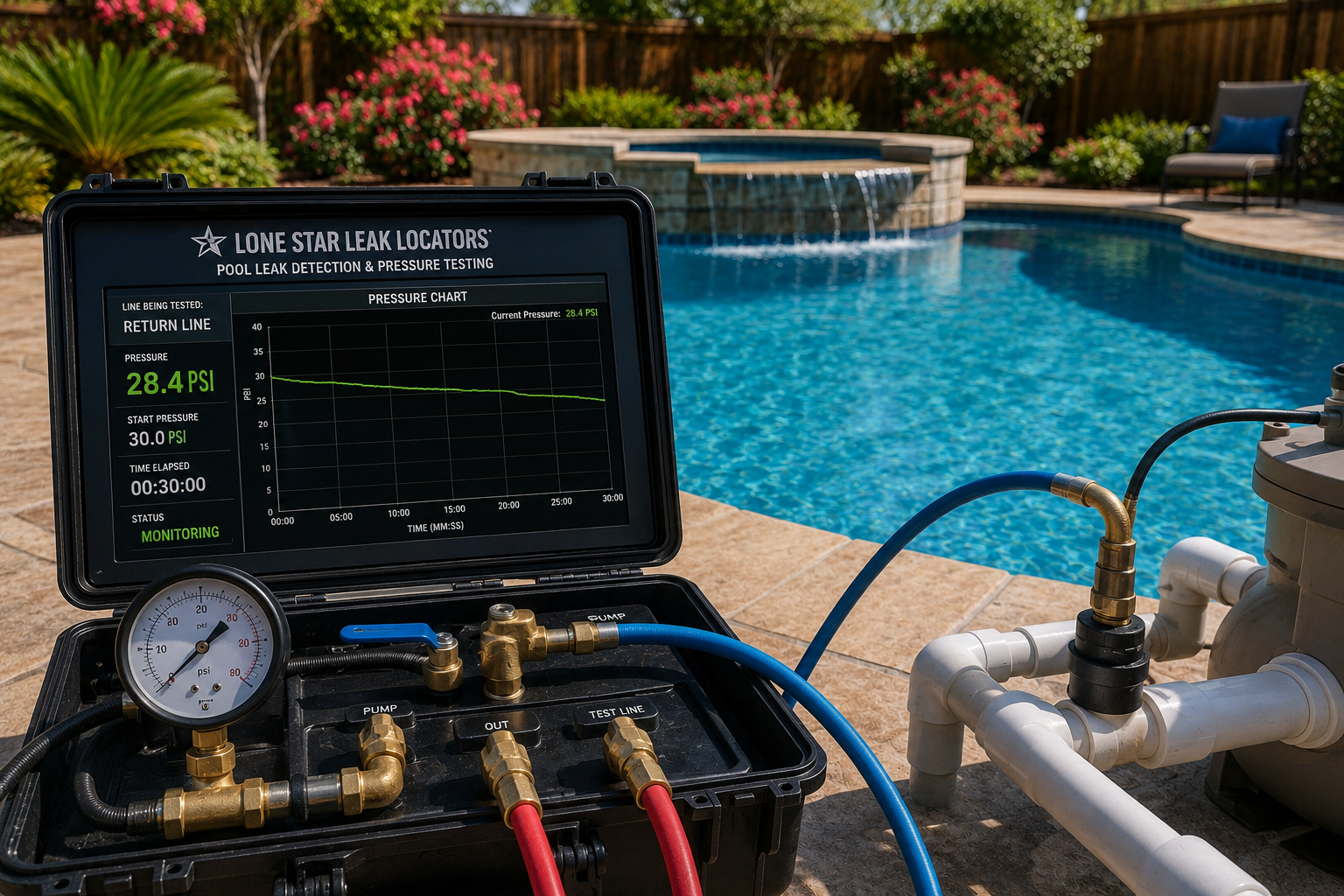
After an accessible equipment leak is ruled out, the suspected suction line can be isolated and tested with a method appropriate to the pool. Route tracing and acoustic techniques may help once a specific line fails. Digging before the failing line is identified turns diagnosis into guesswork.
A logical pool-pump diagnosis
- Shut the pump off if it cannot maintain water.
- Restore the proper pool level and clear safe skimmer obstructions.
- Inspect the lid, seals, valves, plugs, and visible fittings.
- Observe whether air appears only with the pump running.
- Isolate suction sources one at a time.
- Test the specific line that changes the symptom.
- Trace, locate, and document before repair access.
What a useful leak-location visit should document
A sound investigation separates observations from conclusions. The written findings should identify what was tested, what held, what did not, which access points were used, and what limited the work. Equipment such as pressure gauges, thermal imaging, acoustic listening devices, tracer tools, or electronic line locators should support a conclusion rather than replace one.
Lone Star Leak Locators serves homeowners in Plano, Allen, Frisco, Richardson, McKinney, and nearby North Dallas communities. The goal is to narrow the problem before repair access begins. Call or text 972-333-5448 if you need help deciding which test fits the evidence at your property.
Related resources
- What to do after a clean pool dye test
- What a stabilized pool level can mean
- Pool leak testing in North Dallas
- Explore Lone Star Leak Locators services
Frequently asked questions
Can a dirty filter make the pump lose prime?
A restriction can affect flow, but repeated air entry still requires inspection of water level, suction sources, and equipment.
Why are bubbles returning to the pool?
Air may be entering on the suction side or from a low-water or skimmer condition.
Can a lid seal leak without dripping water?
Yes. A suction leak can pull air inward while the pump runs and show little or no water outside.
Does losing prime prove an underground pipe is broken?
No. Accessible equipment, valves, seals, and water level should be checked first.
Can I keep restarting the pump?
Do not run it dry. Repeated dry operation can damage the pump.
What if prime holds when one skimmer is closed?
That pattern helps identify which suction source or valve path needs further testing.
Will dye testing find a suction-line leak?
Dye may find a leak at an accessible opening, but it usually cannot test a buried pipe along its route.
What should the final documentation include?
It should list equipment observations, valve positions, lines tested, results, and any located underground area.
Schedule professional leak detection
Call or text 972-333-5448, or use the secure scheduling page below.