

A cold-side slab leak usually does not create the obvious warm-floor pattern associated with hot-water piping. Homeowners may notice only meter movement, a bill increase, faint water sound, moisture, or a pressure change.
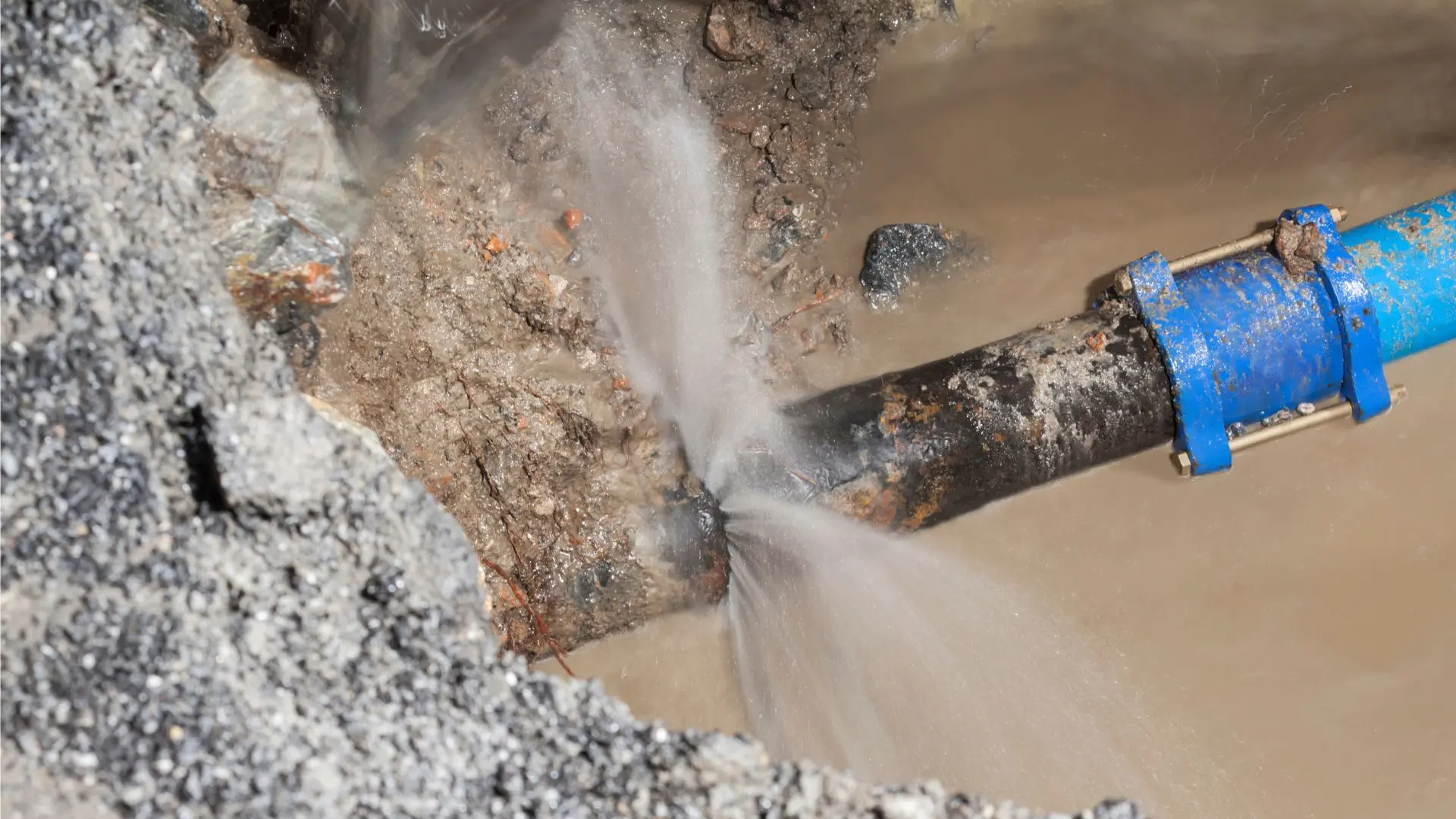
Why a cold-side slab leak can stay hidden
Cold water does not warm the flooring. Soil and the sand bed can absorb flow without producing an indoor puddle. Vapor barriers, tile, wood, and carpet padding can also delay visible moisture. The first clue may be the meter rather than the floor.
Start with unexplained meter movement
Turn off intentional water use and identify automatic systems. Compare meter readings over time. The EPA WaterSense guidance recommends meter checks during a no-use period as a basic way to identify possible household leakage.
A moving meter confirms flow somewhere after the meter. It does not tell you whether the cause is a toilet, irrigation, pool autofill, service line, appliance, or under-slab branch.
Separate hot water from cold water
Close the cold-water inlet to the water heater and repeat the observation. If the meter continues moving, the active loss is more likely on the cold side or on another connected system. If it stops, investigate hot distribution instead.
Homes with recirculation or multiple heaters require a more detailed isolation plan.
Listen for clues that heat cannot provide
A cold-side slab leak may create a hiss, rushing sound, or low-frequency gurgle. Acoustic equipment is most useful after a branch is confirmed leaking and held at controlled pressure. Refrigerators, HVAC equipment, footsteps, and outdoor work can mask the signal.
Trace the actual pipe route
The loudest sound is meaningful only if a pipe runs beneath it. Electronic line tracing, plans, manifolds, and fixture connections help confirm the route. Water can travel under the slab and appear far from the break, so visible moisture alone can mislead.
Consider exterior and fixture sources
Before calling the problem a cold-side slab leak, isolate toilets, irrigation, pool fill, hose bibs, filters, softeners, and the service line. This prevents an outdoor or fixture leak from being mislabeled as an under-slab failure.
How a cold-side slab leak is narrowed down
- Confirm meter movement during a no-use period.
- Isolate fixtures and automatic systems.
- Separate the hot-water system.
- Pressure-test the remaining cold-water branch.
- Trace the pipe route beneath or around the slab.
- Listen for repeatable acoustic evidence.
- Document the location and remaining uncertainty before repair.
What a useful leak-location visit should document
A sound investigation separates observations from conclusions. The written findings should identify what was tested, what held, what did not, which access points were used, and what limited the work. Equipment such as pressure gauges, thermal imaging, acoustic listening devices, tracer tools, or electronic line locators should support a conclusion rather than replace one.
Lone Star Leak Locators serves homeowners in Plano, Allen, Frisco, Richardson, McKinney, and nearby North Dallas communities. The goal is to narrow the problem before repair access begins. Call or text 972-333-5448 if you need help deciding which test fits the evidence at your property.
Related resources
- How hot-water slab leaks create warm areas
- Why slab-leak evidence can appear intermittent
- Professional slab leak detection
- Explore Lone Star Leak Locators services
Frequently asked questions
Can a slab leak exist with no warm floor?
Yes. Cold-water leaks generally do not create a warm-floor clue.
Will a cold leak always make the floor wet?
No. Water may move through soil or remain below the vapor barrier and finishes.
Can thermal imaging find a cold leak?
Sometimes moisture or temperature contrast helps, but thermal imaging may be inconclusive on the cold side.
Why isolate the water heater?
It separates hot-water distribution from the rest of the supply system.
Can the service line mimic a slab leak?
Yes. A leak between the meter and house shutoff can move the meter without indoor fixture use.
Does the loudest sound always mark the pipe?
No. Sound can travel through concrete. Confirm the pipe route and repeat the signal.
Should flooring be removed before testing?
Usually not. Isolation, pressure testing, tracing, and listening should guide any destructive access.
What makes the report useful?
It should show the tested branch, pressure result, route evidence, marked area, and stated limitations.
Schedule professional leak detection
Call or text 972-333-5448, or use the secure scheduling page below.