

Post-tension slab leak detection can usually narrow a concealed water leak before anyone cuts finished flooring or concrete. Detection does not authorize drilling or establish the final repair route. It gives the repair team better evidence about the leaking system, the likely area, and the foundation conditions that require special planning.
Why post-tension foundations change repair planning
Post-tensioned slabs contain stressed steel tendons. Any later coring, drilling, or concrete removal requires foundation-specific planning and qualified professionals. Lone Star Leak Locators focuses first on non-destructive testing and documentation so access decisions are not based on a warm spot or sound alone.
Begin with meter evidence and isolation
Confirm whether the meter shows continuous or intermittent use with fixtures and automatic equipment controlled. Isolate hot and cold branches when accessible. A meter that stops after a specific valve closes can narrow the system, while a meter that continues moving keeps other exterior or service-line possibilities open.
Use several detection methods together
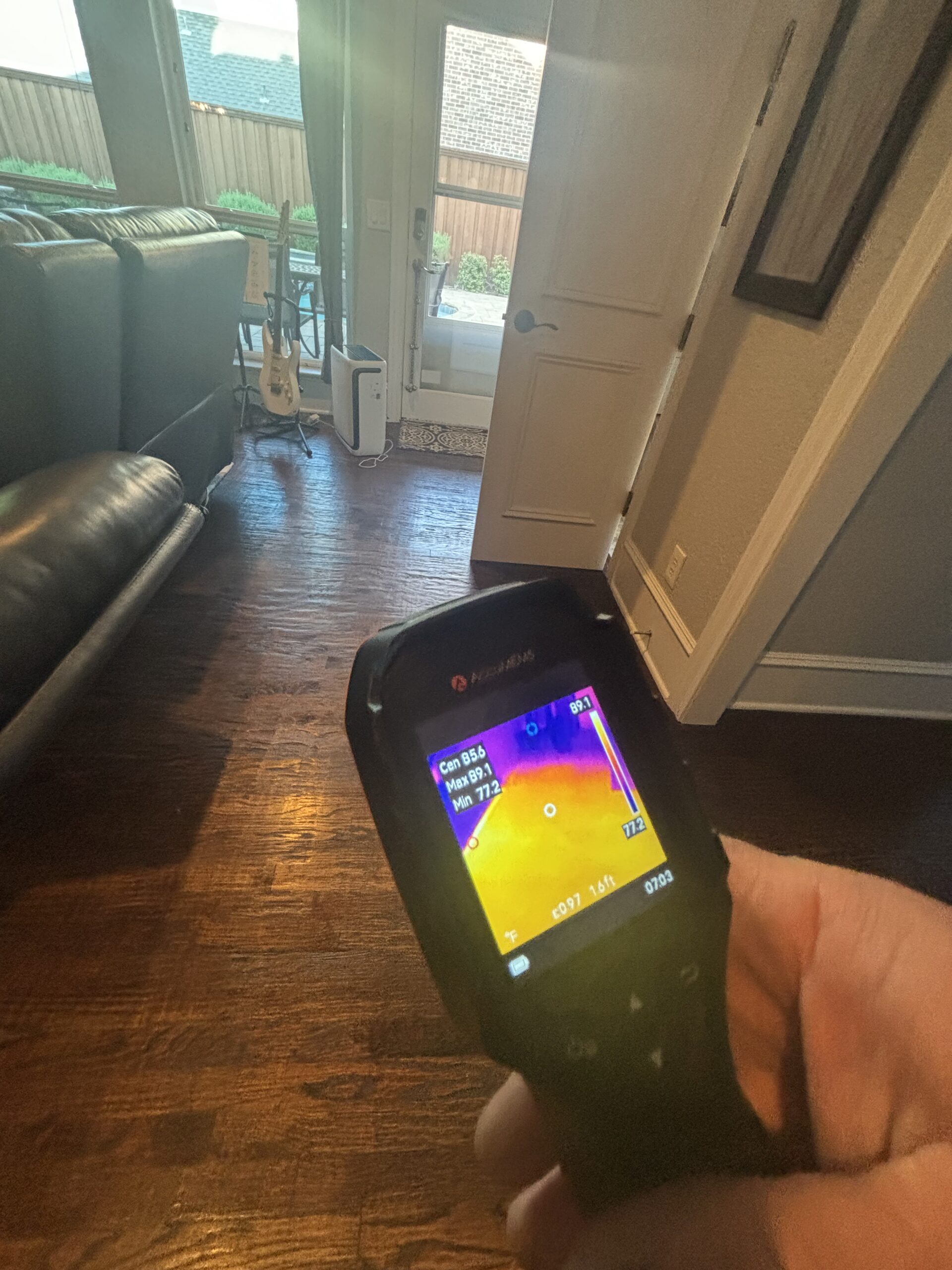
Thermal imaging can identify temperature differences but does not see through concrete. Acoustic listening can compare sound intensity at multiple points. Pressure testing can evaluate an isolated section, and electronic line tracing can help follow accessible metallic piping or tracer conductors. The strongest conclusion comes when independent clues agree.
Why the warmest spot is not always the leak
Hot water can travel along a sleeve, crack, pipe trench, or soil path before warming the floor. HVAC airflow, sunlight, appliances, and radiant heat can also create thermal patterns. The likely leak area must be compared with plumbing layout and pressure behavior.
What to document before repair access
A useful leak-location record identifies the test conditions, valves operated, equipment used, pressure or meter response, marked area, and important limitations. It should distinguish a probable leak zone from an exact structural penetration point.
How homeowners in DFW can prepare
In Plano, Allen, Frisco, Richardson, and nearby North Dallas communities, clear access to the water heater, house shutoff, meter, and affected rooms helps. Avoid running dishwashers, washing machines, irrigation, or hot water immediately before the appointment unless instructed otherwise.
Related leak-detection resources
- Cold-side slab leaks without a warm floor
- Why slab leaks can be intermittent
- Slab leak detection warning signs
- Post-Tensioning Institute technical resources
Frequently asked questions
Can a slab leak be located without cutting concrete?
The investigation can often narrow the probable area without cutting. The repair contractor still determines whether access, rerouting, tunneling, or another method is appropriate.
Can thermal imaging show the exact pipe break?
No. It shows surface temperature patterns. Water movement and surrounding heat sources can shift the visible pattern away from the break.
Does acoustic equipment work through every floor finish?
Results vary with pipe material, leak rate, pressure, slab thickness, flooring, background noise, and soil conditions. It is one part of the evidence.
Can you drill into a post-tension slab after locating the leak?
Do not treat a leak mark as permission to drill. The foundation and tendon layout require qualified evaluation before any penetration or concrete removal.
What if the meter only moves sometimes?
Record when it moves and which equipment is active. Intermittent use can come from valves, appliances, irrigation, recirculation, or a leak that changes with pressure.
Will shutting off the water heater isolate the hot system?
It can help in some configurations, but valves may leak through and piping layouts vary. The test conditions must be documented.
Is a reroute always better than opening the slab?
No. Repair method depends on the failed pipe, layout, structural constraints, finishes, access, and professional recommendations.
What should I receive after detection?
You should receive a clear explanation of the evidence, the marked probable area, the tested scope, and any unresolved limitations.
Schedule Lone Star Leak Locators
For slab, pool, gas, or hidden-water leak detection in the Dallas–Fort Worth area, call or text 972-333-5448.