

pool water loss after resurfacing
Fresh plaster or another new interior finish changes how a pool is filled, brushed and chemically managed, but it should not make unexplained water loss automatically acceptable. The right comparison accounts for weather, startup activity and every operating mode before assuming the shell or plumbing is leaking.
Quick answer
Use a controlled sequence to compare the meter, equipment state and isolated plumbing zones. One symptom rarely identifies a source. Preserve safety, document limitations and base repair decisions on evidence that points to a specific system or segment.
Document the startup conditions
Record the fill date, waterline, pump schedule, feature use and any instructions from the finish contractor. Splash-out, backwashing, filter service and frequent brushing can change observations. Keep the water at the specified level for the finish while avoiding an unsupported diagnosis from a single day.
The observation becomes more useful when the time, operating state and test boundary are written down. Avoid changing several controls at once; a sequence with one change at a time makes cause and effect easier to interpret.
Compare evaporation carefully
A container comparison can help show whether the pool is losing more water than nearby exposed water under similar conditions. Wind, temperature, humidity, sun and heated-water operation all matter. The comparison is a screening observation, not a location method, and it should not interfere with required startup care.
The observation becomes more useful when the time, operating state and test boundary are written down. Avoid changing several controls at once; a sequence with one change at a time makes cause and effect easier to interpret.
Check operating modes separately
Note whether loss changes with the circulation pump on or off and whether waterfalls, spa spillways, cleaners or heaters are active. Equipment-pad moisture, air entering a suction line or unexplained wet areas can guide the next test, but dry ground does not rule out a buried leak.
The observation becomes more useful when the time, operating state and test boundary are written down. Avoid changing several controls at once; a sequence with one change at a time makes cause and effect easier to interpret.
How a pool leak test is organized
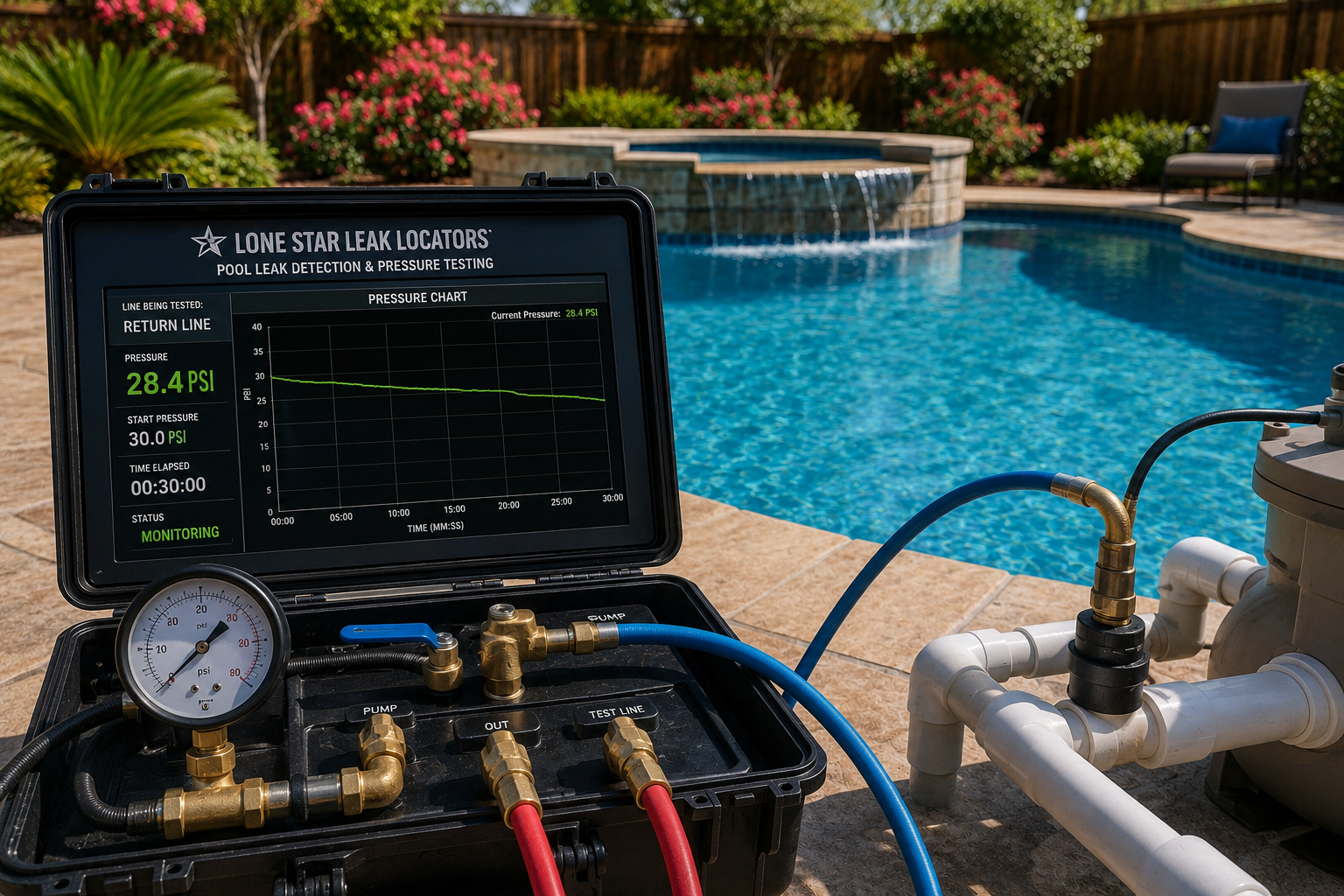
A systematic evaluation may examine the shell, fittings, lights, skimmers, equipment and individual plumbing lines. Dye is useful only near a suspected opening with calm water; it is not a whole-pool answer. Pressure testing can evaluate isolated lines, while listening and camera tools may support specific findings.
The observation becomes more useful when the time, operating state and test boundary are written down. Avoid changing several controls at once; a sequence with one change at a time makes cause and effect easier to interpret.
How to prepare for a leak-location visit
- Record when the symptom appears and which equipment is operating.
- Keep utility graphs, repair invoices and photographs available.
- Do not open walls, dig, alter gas piping or dismantle electrical equipment to create access.
- Identify safe, working shutoffs without forcing an old valve.
- Ask the technician to state the test boundary, result and limitations in plain language.
Leak location is a process of narrowing possibilities. Some results identify a small repair area; others show that additional isolation or trade-specific work is required. A useful report separates measured findings from hypotheses and does not promise certainty that the available tests cannot support.
| Evidence | What it can show | Limit |
|---|---|---|
| Meter pattern | Timing and approximate consumption | Does not locate the source alone |
| Isolation test | Narrows the affected zone | Depends on reliable valves and boundaries |
| Acoustic or thermal clue | Prioritizes an area for confirmation | Materials and background conditions affect results |
Frequently asked questions
Is all early water loss caused by the new finish?
No. Startup activity can affect observations, but persistent loss above the comparison baseline deserves evaluation.
Can I let the water drop to find the leak level?
Not without guidance. Low water can harm finishes or equipment and may violate startup instructions.
Does loss only with the pump running prove a return-line leak?
It is a clue, not proof. Features, waste lines and equipment conditions also change between operating modes.
Can dye test an entire pool?
No. Dye is a local test near a suspected defect under calm conditions.
Should the resurfacing contractor be involved?
Yes. Share the documented loss and preserve startup requirements while an independent source evaluation proceeds.
What should I record each day?
Mark the waterline consistently, note weather and operating mode, and photograph equipment-pad or deck moisture.
Schedule evidence-based leak testing
Call Lone Star Leak Locators to discuss the symptom, the tests already completed and the safest next step.
Educational information only. Conditions and appropriate testing vary by property.