

hot-water recirculation loop or slab leak
Warm flooring, fast hot-water delivery or a cycling heater can be normal consequences of a recirculation system, but they can also overlap with slab-leak symptoms. The distinction comes from controlled observations of flow, temperature and system boundaries—not from a warm spot alone.
Quick answer
Use a controlled sequence to compare the meter, equipment state and isolated plumbing zones. One symptom rarely identifies a source. Preserve safety, document limitations and base repair decisions on evidence that points to a specific system or segment.
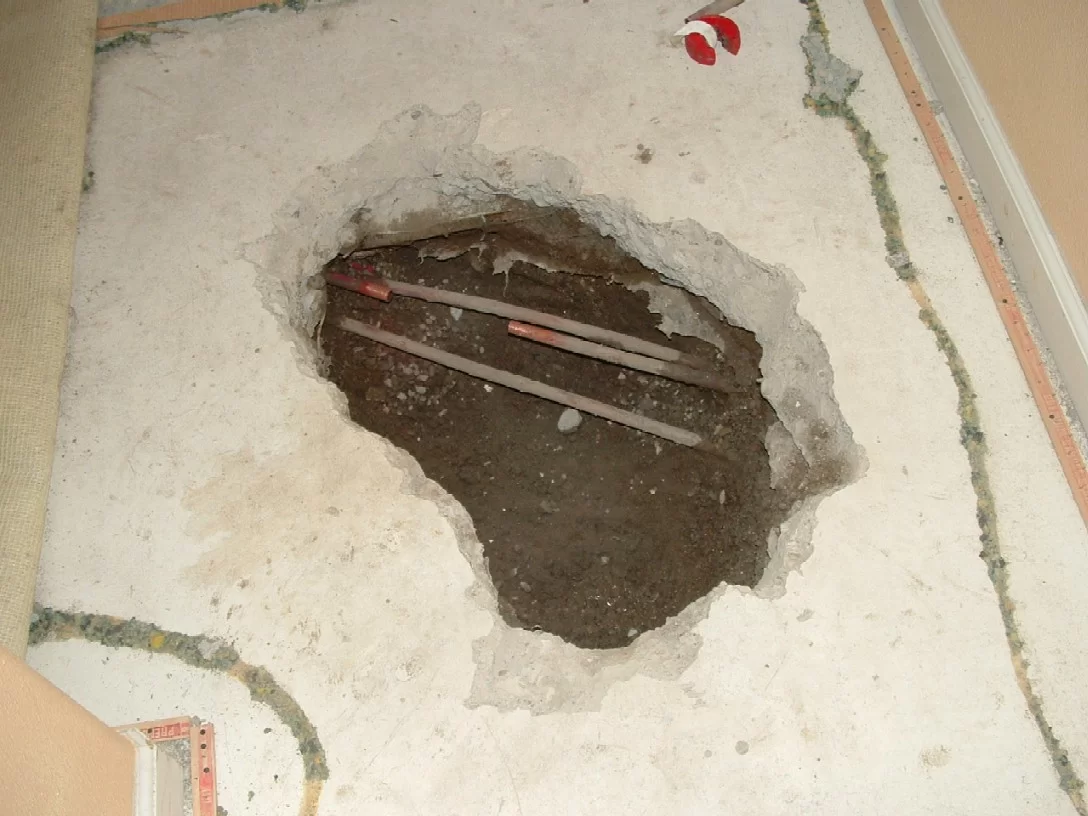
Understand the recirculation layout
A dedicated return loop, crossover valve or on-demand pump can move hot water even when no faucet is open. Identify the controller, schedule and return path if they are accessible. Do not assume the pump is off because it is quiet; some systems run intermittently or use temperature-based controls.
The observation becomes more useful when the time, operating state and test boundary are written down. Avoid changing several controls at once; a sequence with one change at a time makes cause and effect easier to interpret.
Compare pump timing with meter movement
Record the physical meter and water-heater behavior with the home in a no-use condition. Note whether flow corresponds to the recirculation schedule. A recirculation pump moves water within the plumbing loop and should not by itself consume metered water, but a crossover device, fixture problem or leak can complicate the pattern.
The observation becomes more useful when the time, operating state and test boundary are written down. Avoid changing several controls at once; a sequence with one change at a time makes cause and effect easier to interpret.
Treat temperature as one clue
Thermal imaging can show temperature differences at the surface, but heat spreads through concrete and may follow piping, ducts or sunlight. Flooring type changes the pattern. A warm area helps prioritize testing; it does not establish the pipe’s exact route or prove that it is leaking.
The observation becomes more useful when the time, operating state and test boundary are written down. Avoid changing several controls at once; a sequence with one change at a time makes cause and effect easier to interpret.
Build a multi-test conclusion
A professional investigation can combine meter observation, pressure behavior, heater isolation, recirculation control checks and acoustic or thermal methods. Results are strongest when methods agree. The report should explain the tested boundary and any area that could not be evaluated.
The observation becomes more useful when the time, operating state and test boundary are written down. Avoid changing several controls at once; a sequence with one change at a time makes cause and effect easier to interpret.
How to prepare for a leak-location visit
- Record when the symptom appears and which equipment is operating.
- Keep utility graphs, repair invoices and photographs available.
- Do not open walls, dig, alter gas piping or dismantle electrical equipment to create access.
- Identify safe, working shutoffs without forcing an old valve.
- Ask the technician to state the test boundary, result and limitations in plain language.
Leak location is a process of narrowing possibilities. Some results identify a small repair area; others show that additional isolation or trade-specific work is required. A useful report separates measured findings from hypotheses and does not promise certainty that the available tests cannot support.
| Evidence | What it can show | Limit |
|---|---|---|
| Meter pattern | Timing and approximate consumption | Does not locate the source alone |
| Isolation test | Narrows the affected zone | Depends on reliable valves and boundaries |
| Acoustic or thermal clue | Prioritizes an area for confirmation | Materials and background conditions affect results |
Frequently asked questions
Can a recirculation loop make several floors feel warm?
Yes, depending on pipe routing, insulation and operating schedule. That pattern still needs comparison with meter and pressure evidence.
Does a slab leak always move the meter?
Not always at an obvious rate. Small or intermittent leaks and meter resolution can complicate observation.
Should I switch off the recirculation pump?
Use the manufacturer’s normal control only if it is safe and accessible. Do not alter wiring or dismantle equipment.
Can thermal imaging pinpoint the pipe depth?
No. It shows surface temperature patterns, not exact pipe depth or a guaranteed leak location.
Why might the heater run with no faucet open?
Heat loss, recirculation control, crossover problems or a hot-water leak are possible explanations.
What records should I keep?
Note warm-area location, pump schedule, heater cycles, meter readings and any recent plumbing or foundation work.
Schedule evidence-based leak testing
Call Lone Star Leak Locators to discuss the symptom, the tests already completed and the safest next step.
Educational information only. Conditions and appropriate testing vary by property.