

gas odor after appliance replacement
A gas odor after an appliance replacement must be treated as an emergency warning, even when the odor seems faint or appears near the new connection. Do not search with a flame, operate switches or attempt to tighten fittings. Leave the area and contact the gas utility or emergency services from a safe location.
Quick answer
Use a controlled sequence to compare the meter, equipment state and isolated plumbing zones. One symptom rarely identifies a source. Preserve safety, document limitations and base repair decisions on evidence that points to a specific system or segment.
Safety comes before diagnosis
Move people and pets away from the suspected area. Avoid actions that could create a spark, including switches, phones used inside the area, vehicles in an attached garage or attempts to restart equipment. Follow the gas utility’s instructions. If there is an immediate danger, call emergency services.
The observation becomes more useful when the time, operating state and test boundary are written down. Avoid changing several controls at once; a sequence with one change at a time makes cause and effect easier to interpret.
Why timing does not prove the exact source
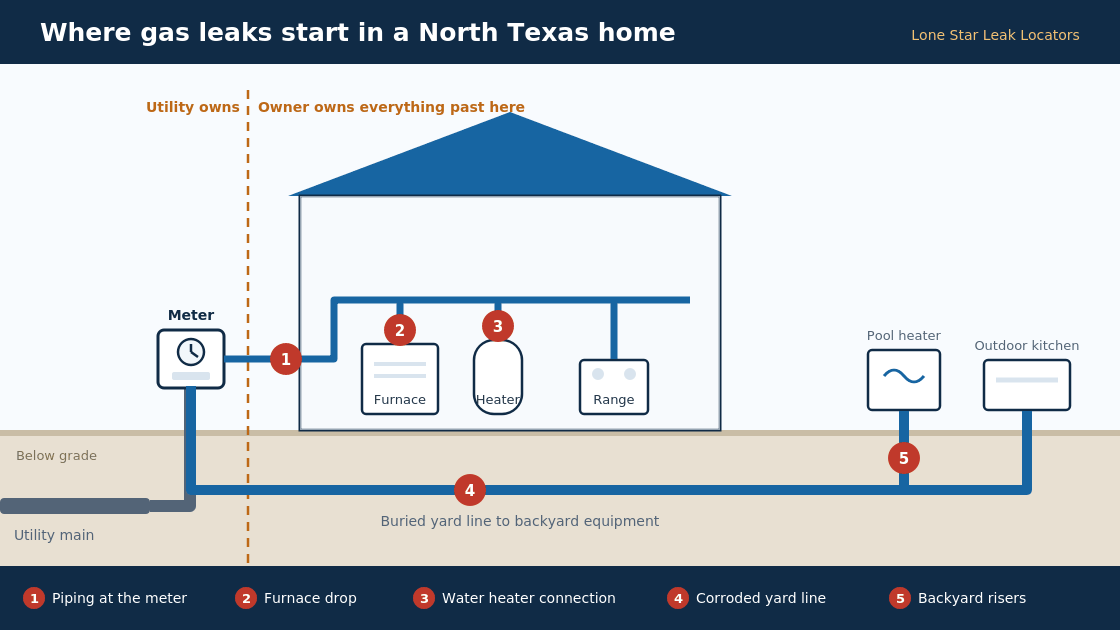
The new connection is an important fact, but work can also reveal a problem at a valve, flex connector, branch, manifold or unrelated section. Odor may travel through cabinets or wall cavities. A qualified evaluator should inspect the work and test the applicable system rather than relying on odor location alone.
The observation becomes more useful when the time, operating state and test boundary are written down. Avoid changing several controls at once; a sequence with one change at a time makes cause and effect easier to interpret.
What a pressure test can and cannot do
A controlled pressure test can show whether the tested piping holds the required test pressure under the applicable procedure. It does not automatically pinpoint the leak or include equipment beyond the isolated boundary. Electronic detection or approved leak-detection solution may be used to narrow a finding after the system is made safe.
The observation becomes more useful when the time, operating state and test boundary are written down. Avoid changing several controls at once; a sequence with one change at a time makes cause and effect easier to interpret.
Restoration requires coordination
If service has been shut off, restoration may require repair documentation, a permit or inspection, and utility procedures. Requirements vary by jurisdiction and situation. Do not reopen a valve or relight equipment unless the authorized utility and qualified trade professional have completed the required steps.
The observation becomes more useful when the time, operating state and test boundary are written down. Avoid changing several controls at once; a sequence with one change at a time makes cause and effect easier to interpret.
How to prepare for a leak-location visit
- Record when the symptom appears and which equipment is operating.
- Keep utility graphs, repair invoices and photographs available.
- Do not open walls, dig, alter gas piping or dismantle electrical equipment to create access.
- Identify safe, working shutoffs without forcing an old valve.
- Ask the technician to state the test boundary, result and limitations in plain language.
Leak location is a process of narrowing possibilities. Some results identify a small repair area; others show that additional isolation or trade-specific work is required. A useful report separates measured findings from hypotheses and does not promise certainty that the available tests cannot support.
| Evidence | What it can show | Limit |
|---|---|---|
| Meter pattern | Timing and approximate consumption | Does not locate the source alone |
| Isolation test | Narrows the affected zone | Depends on reliable valves and boundaries |
| Acoustic or thermal clue | Prioritizes an area for confirmation | Materials and background conditions affect results |
Frequently asked questions
Should I turn off the meter myself?
Follow the gas utility’s emergency instructions. Do not enter or remain in an unsafe area to operate equipment.
Can a carbon-monoxide alarm detect natural gas?
Many carbon-monoxide alarms do not detect fuel gas. A lack of alarm does not make an odor safe.
Can new-appliance odor be confused with fuel gas?
Some materials have odors, but a suspected gas odor must still be treated as real until the utility or qualified professional says otherwise.
Is bubble solution enough?
It can support a local check by a qualified person, but it does not replace a complete evaluation when the system may be leaking.
Why might service stay off after the leak is repaired?
Utility, permit and inspection steps may be required before safe restoration.
What information should I provide?
Share the appliance type, work date, where odor was noticed and any actions already taken by the utility or installer.
Schedule evidence-based leak testing
Call Lone Star Leak Locators to discuss the symptom, the tests already completed and the safest next step.
Educational information only. Conditions and appropriate testing vary by property.