

pool water drops when spa spillway runs
Quick answer
A changing pool level while the spa spills into it does not identify a broken pipe by itself. The operating mode changes circulation, water level, turbulence and sometimes autofill behavior. Record the mode, pump speed, water level and weather, then compare controlled conditions before deciding which line or structure needs professional testing.
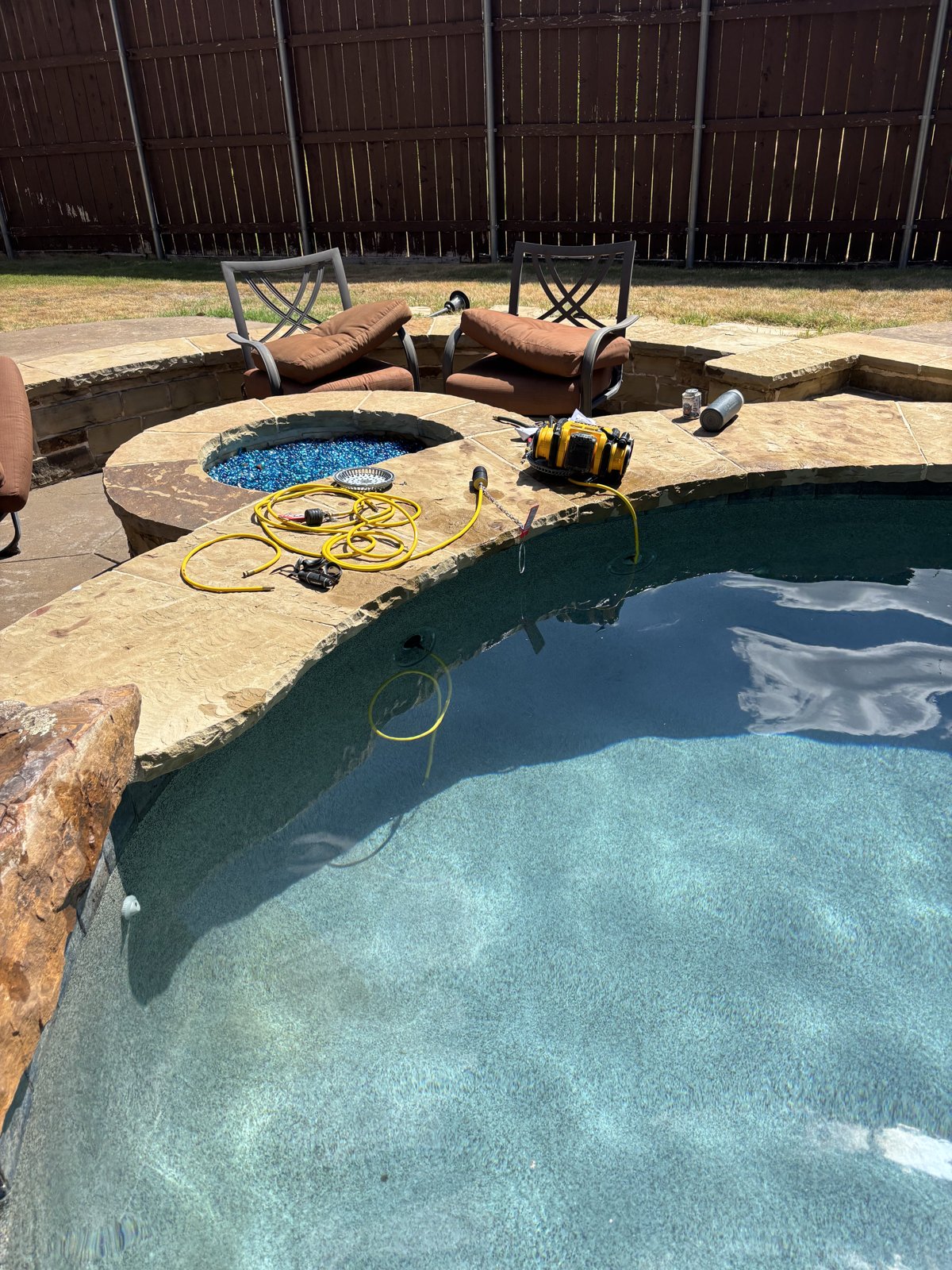
Understand the hydraulic path
A spa spillway transfers water into the pool while the equipment pulls and returns water through selected valves. Check the equipment’s normal, accessible settings without disassembling anything. The spa level may shift when the mode changes, and a pool overflow can discharge water that looks like a leak. If the pool has an autofill, it can hide the amount of water lost. A diagram of suction and return paths helps the testing professional decide which circuit to isolate.
Compare two controlled operating windows
Note pool and spa levels with the spillway off and again with it running under comparable weather. Record time, pump speed, valve positions and whether autofill is enabled by its normal control. The point is to make observations reproducible, not to leave equipment in an unsafe state. Wind and splashing can increase apparent loss; evaporation occurs in both modes. The EPA WaterSense pool guide describes an evaporation bucket test, which is a screening comparison rather than a precise location method.
Look for surface and overflow clues
Observe whether the spillway throws water onto coping, deck, planting beds or the outside of the vessel. Water around the equipment pad may originate at an exposed union, valve or pump. Check where the overflow line discharges if it is safely visible. A wet area can be runoff from a drain or irrigation rather than a pressurized pool line. Photographs taken in each mode can help distinguish a repeatable pattern from one rainy-day observation.
Professional testing and limits
A leak-location visit may include separate pressure tests for accessible return or suction circuits, dye observation at suspect penetrations, acoustic listening and equipment-pad inspection. No one method proves every branch. A pressure test identifies a tested circuit’s behavior under its particular boundary; dye movement can point to a local opening only when water and circulation conditions are understood. Ask for results by system and the areas not tested before approving deck removal.
What to prepare for an inspection
- Write down the first time the symptom appeared and the equipment state at that moment.
- Keep photos, utility readings, invoices and previous test results together.
- Identify accessible shutoffs without forcing a stuck valve or exposing an electrical hazard.
- Ask which system is included, what the test can establish, and which areas remain untested.
Leak location narrows evidence. A meter, wet spot, noise, temperature pattern or odor alone can point to several causes. A useful report states the measured condition and testing boundary before it recommends opening a surface or replacing pipe. The method and next step depend on access, materials and safety.
| Observation | What it may establish | What it cannot establish alone |
|---|---|---|
| Timing and equipment state | A repeatable relationship | The exact failure point |
| Meter, level or pressure trend | A test-boundary behavior | Every untested branch’s condition |
| Visible or acoustic clue | A priority for further confirmation | A guaranteed excavation point |
A practical observation log
Record the water level against a fixed reference at the same time of day. Note whether the system is circulating, whether water is visibly crossing the spillway, the pump speed shown by its controller and whether rain or heavy wind occurred. A change in the spa level after switching modes is a redistribution of water and should be recorded separately from a persistent decline in the combined system. If the pool has an overflow, note whether water exits there when the spillway raises the pool surface. Do not block an overflow for a test.
Compare observations over intervals long enough to exceed ordinary measurement error, but do not leave equipment running solely for an experiment when conditions may damage it. A ruler mark at the waterline is more reproducible than a casual visual estimate. The EPA WaterSense bucket comparison helps distinguish evaporation from additional loss, yet its result depends on matching exposure and does not reveal which component is responsible. A professional can decide whether to isolate the spa shell, spillway, equipment pad and plumbing circuits.
How to use test results
Ask the tester to identify the exact circuit, test pressure, duration and isolation points in a pressure-test record. A stable test of one return line does not clear the remaining suction line, spa body or overflow. Dye observations near fittings require an appropriate still-water condition; circulation can move dye without a defect. If the evidence points toward a structural opening, the repair scope differs from an equipment-pad union or buried pipe. Request the least disruptive confirmation consistent with the evidence before authorizing deck or landscape removal.
Pool water can migrate under a deck and emerge away from the opening. A damp joint, greener planting bed or sound heard at one spot is a clue, not a precise excavation mark. Document what was tested and what remains unknown. That record makes a second visit, a repair estimate and any subsequent retest more useful.
Frequently asked questions
Does the spillway itself leak?
It can splash or have a structural issue, but mode-specific loss also can come from plumbing or overflow. Test the hypotheses separately.
Should I turn off autofill?
Only use the normal accessible control if safe; record its status so it does not mask water loss.
Will a bucket test locate the leak?
No. It helps distinguish evaporation from excess water loss under the test conditions.
Can pump speed change the symptom?
Yes. Flow, pressure and splash pattern can change, so record the speed for each observation.
Is a wet deck proof of a pipe leak?
No. Splashing, irrigation, drainage and rain can wet the same area.
What should I send the technician?
Water-level notes, mode settings, photos, equipment history and any recent resurfacing or repairs.
Sources and related guidance
EPA WaterSense pool guide explains the general safety or testing context. Pool water level stops dropping at one height covers a related homeowner question. Conditions on an individual property require separate evaluation.
Schedule leak detection in North Texas
Tell Lone Star Leak Locators the symptom, the equipment involved and any steps already taken. Service availability and testing scope depend on the property.
Call 972-333-5448 Request an appointment
Educational guidance. For a suspected gas leak, leave immediately and call 911 and the gas utility from a safe distance.