

Pool Vacuum Line Leak Isolation Testing
A pool vacuum line leak can seem invisible until a suction cleaner is connected. Then bubbles appear, the pump basket loses water, or the cleaner stalls. The buried line is one possibility, but hose joints, fittings, valves, and pump seals can create the same symptom.
Why the cleaner can expose a suction-side problem
A pool vacuum line leak may become noticeable only when a suction cleaner is connected because the system’s operating conditions change. The cleaner adds restriction, changes flow, and can increase the vacuum on that branch. A loose hose, lid seal, cleaner fitting, valve, or underground line can then admit air.
Air symptoms do not automatically mean the underground vacuum line leaks. Start with the parts you can see and test one configuration at a time.
Clues to record before changing valves
- Bubbles begin only after the cleaner is attached.
- The pump basket loses water or develops a persistent air pocket.
- The pump primes normally on the skimmer or main drain alone.
- The cleaner slows, pulses, or stops after several minutes.
- Water loss changes between cleaner-on and cleaner-off periods.
If the pump loses prime even without the cleaner, start with the broader checks in our guide to a pool pump that keeps losing prime.
A safe homeowner isolation check
Turn the pump off before connecting or disconnecting suction fittings. Inspect the cleaner hose for splits and make sure each section is fully seated. Check the pump lid O-ring, drain plugs, and the visible valve area for damage or debris. Then run the pool in its normal configuration and note the basket condition.
Next, compare operation with the cleaner connected, without changing several valves at once. If your system has labeled valves and you understand them, document which suction branch is open. Do not run the pump dry and do not force an unfamiliar valve.
How a professional separates hose, equipment, and buried line
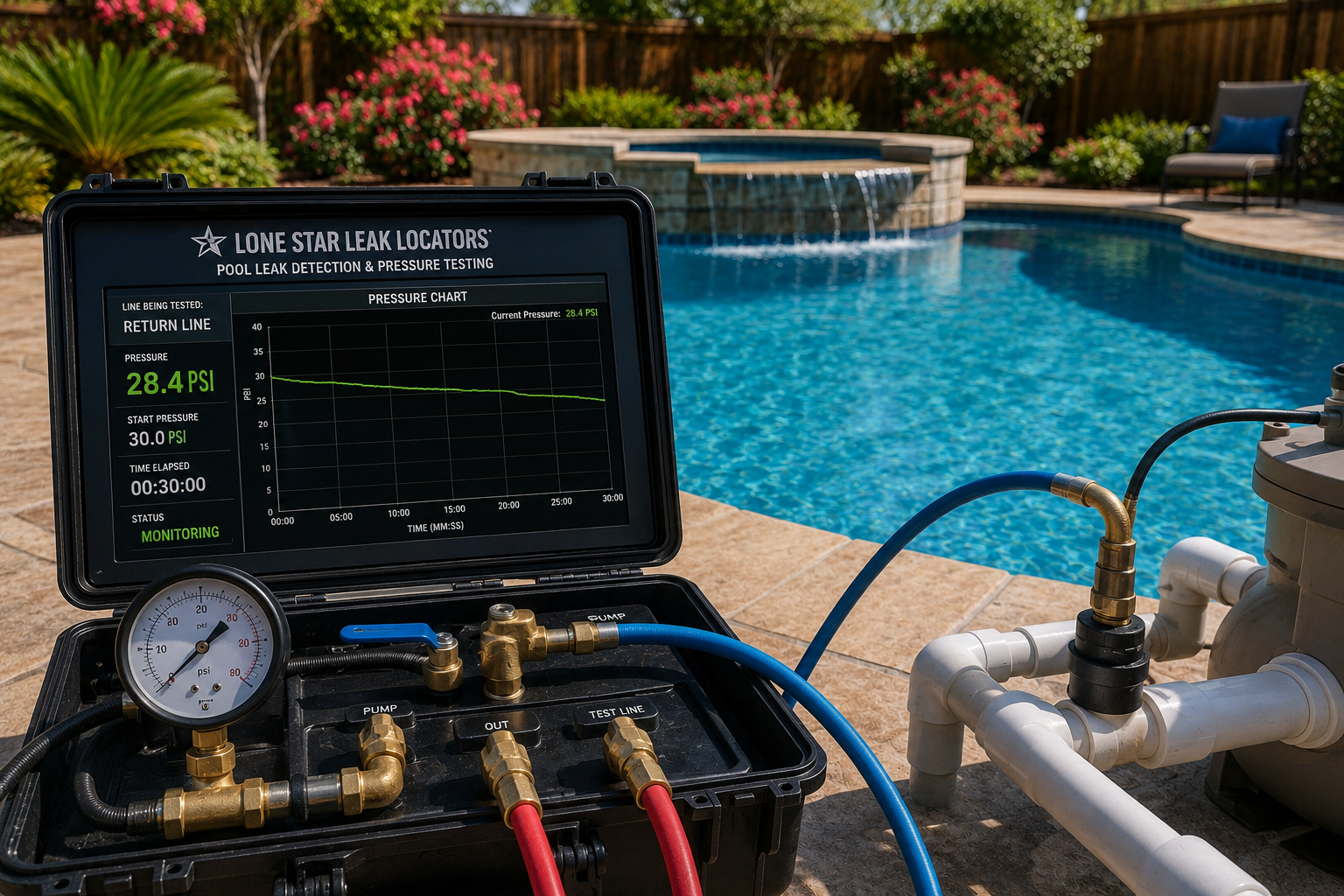
A focused pool leak evaluation can test the cleaner hose and fittings, inspect the equipment pad, isolate the dedicated vacuum branch, and pressure-test plumbing. Acoustic equipment may help narrow a buried release after the line fails an isolation test. Dye is useful at some shell penetrations, but dye testing does not test an entire buried suction line.
A pressure result also needs context. The test should identify the isolated branch, test medium, starting pressure, duration, and observed change.
Do not confuse air entry with water loss
A suction-side opening can admit air while the pump runs, yet release water differently when the system is off. Conversely, a cracked hose can create air without any underground leak. Compare air symptoms with a marked water-level test. The EPA notes that pools lose water through evaporation, cleaning, splashing, and leaks; its pool water-efficiency guidance supports separating normal water use from leakage.
If the level repeatedly stops at one height, see our explanation of a pool that stabilizes at a specific level.
What to bring to a diagnostic visit
- Cleaner brand and hose configuration
- Photos of valve positions that work normally
- Videos showing bubbles or the pump basket air pocket
- Water-level marks with pump-on and pump-off times
- Any recent equipment, valve, or deck work
These details help the technician reproduce the symptom and avoid testing unrelated branches first.
Frequently asked questions
Does air in the pump basket prove the vacuum line leaks?
No. The cleaner hose, pump lid, drain plugs, valves, fittings, and water level can also allow air into the suction side.
Can I use dye to test a buried vacuum line?
Dye can show local movement at an exposed opening. It cannot verify the full length of buried plumbing.
Why does the cleaner work for a few minutes and stop?
Restriction, low water level, a clogged basket, hose air, valve position, or a suction-side opening can interrupt steady flow.
Should I keep running the pump if it loses prime?
No. Stop the pump if it cannot maintain water flow. Dry running can damage equipment.
Can a hose crack mimic an underground leak?
Yes. Test or substitute the visible hose before concluding that the buried branch failed.
Does a suction leak always cause visible water outside?
No. Operating pressure, soil, deck construction, and pipe route affect whether water appears at the surface.
What does a pressure test tell me?
It shows whether an isolated plumbing branch holds under defined test conditions. It does not by itself identify the exact break location.
Can the skimmer and vacuum line be tested separately?
Often, yes, if the plumbing and valves allow proper isolation. The technician should confirm the layout before interpreting results.
Schedule targeted leak detection
For a careful, non-destructive diagnostic plan in Plano, Allen, Frisco, McKinney, Richardson, and nearby North Dallas communities, call Lone Star Leak Locators at 972-333-5448.