

A hot water recirculation line leak can create warm-floor areas, unexpected water-heater operation, or unexplained water use without leaving a visible puddle. However, those symptoms do not prove that the recirculation line is the source. A careful investigation separates the recirculation loop from other hot-water piping, fixtures, and equipment.
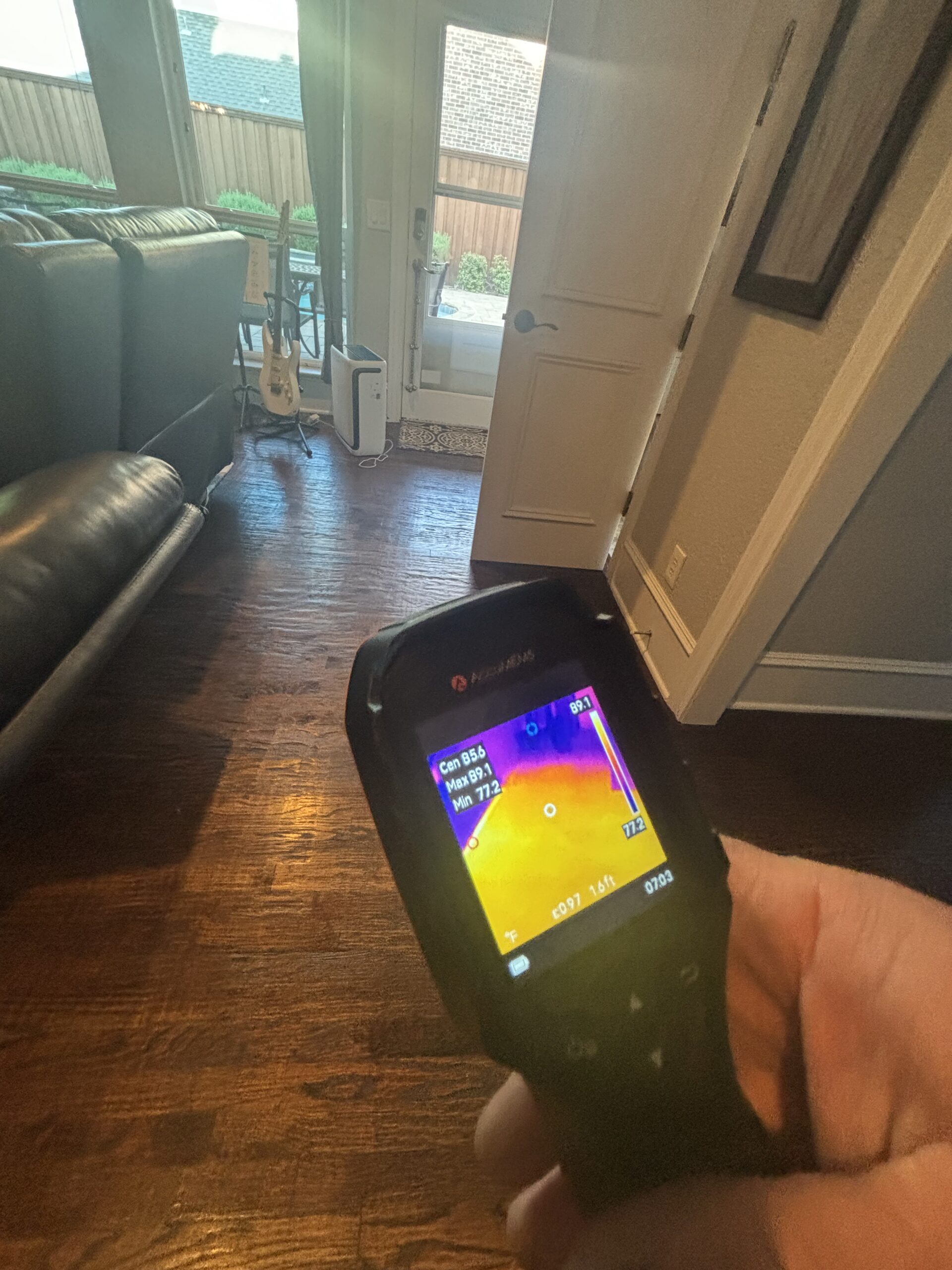
The goal is to identify the source before destructive access or repair. Lone Star Leak Locators documents the test scope, supported findings, and important limitations so the next decision is based on evidence.
Why a recirculation loop changes the diagnosis
A recirculation system moves hot water through a loop so fixtures receive warm water sooner. The U.S. Department of Energy’s Building Science Education resources describe this looped arrangement and the role of the circulation path. Because the system can include a pump, return piping, check valves, and controls, the investigator needs to understand the layout before interpreting symptoms.
For example, a warm tile area could relate to nearby hot piping, a leaking supply line, heat transfer from a recirculation route, or another source. The location of the warm spot alone does not identify the failed pipe.
Evidence to collect before testing
Write down when the symptom appears. Note whether the recirculation pump runs continuously, on a timer, or only on demand. Also record whether the water heater cycles when no one is using hot water.
Keep recent water bills and any plumbing diagrams. If a builder or prior plumber labeled the return line near the water heater, photograph the labels without changing valve positions. This information helps the technician design a focused test.
How a professional narrows the source
The diagnostic plan may include meter observations, pressure testing of an appropriate isolated section, acoustic listening, and thermal imaging. Each tool answers a different question. Thermal patterns can guide the search, but they do not see through concrete or prove the exact break point by themselves.
The technician should explain which section was tested, how the result was interpreted, and what remained connected or untested. That protects the homeowner from turning one clue into an unnecessary demolition plan.
Helpful resources
Frequently asked questions about hot water recirculation line leak
Can a recirculation-line leak raise both water and energy use?
It can. Lost hot water may increase water use and cause the water heater or recirculation equipment to run more. Those symptoms still require diagnosis because controls and fixtures can create similar patterns.
Does a warm floor always mean a hot-water slab leak?
No. A warm area is a clue, not proof. Pipe routing, sunlight, HVAC ducts, appliances, and normal hot-water use can also affect surface temperature.
Can thermal imaging pinpoint the exact pipe break?
Thermal imaging can show temperature patterns that guide testing. It does not directly see a pipe break through concrete, so professionals correlate it with other evidence.
Should I turn valves to isolate the loop myself?
Do not change unfamiliar valves or disable equipment. Give the technician the system information and let a qualified professional plan the isolation.
Can the return line be rerouted instead of opening the slab?
Sometimes, but the building layout and confirmed leak location control the options. A repair plumber should design the final solution.
What should I provide before the appointment?
Share water bills, symptom timing, photographs near the water heater, prior repairs, and any drawings that show the recirculation route.
Schedule professional leak detection
Call Lone Star Leak Locators to discuss the symptoms and confirm the right diagnostic scope for your North Texas property.