

Slab Leak Testing After Foundation Leveling
A slab leak after foundation leveling deserves a disciplined check, not an assumption. New moisture may reflect an active supply leak, trapped water that is still drying, or an unrelated fixture or drain issue. Here is how North Texas homeowners can separate the clues before repair work begins.
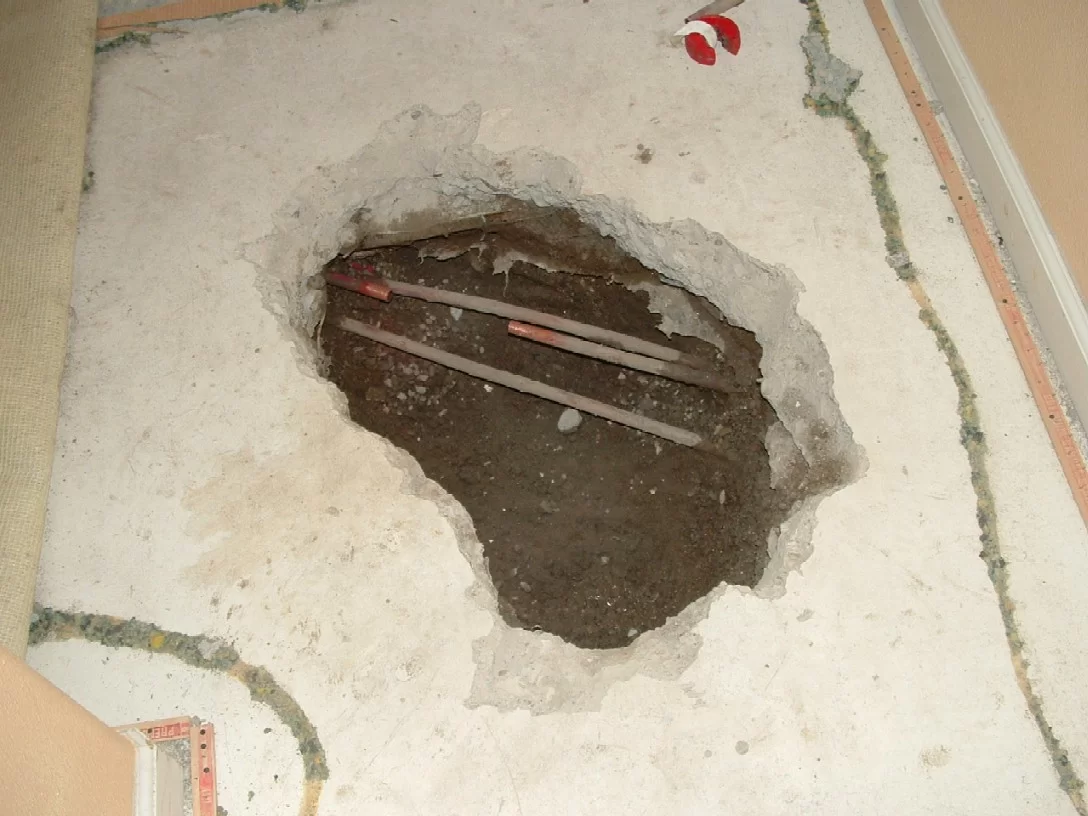
Why symptoms may appear after foundation work
A slab leak after foundation leveling can be a new plumbing problem, an older leak that became easier to notice, or moisture left from earlier conditions. Timing alone does not prove the cause. Foundation movement, plumbing movement, weather, and normal household water use can overlap.
Start with evidence. Note the day the leveling finished, when the symptom began, which rooms are affected, and whether the water meter moves when every fixture is off. If carpeting, baseboards, or cabinets are damp, photograph the area and protect belongings while the source is investigated.
What clues point toward an active pressurized leak?
- The meter changes during a controlled no-use period.
- A warm floor area persists even when indoor temperature is stable.
- You hear water movement with fixtures closed.
- Moisture returns after drying rather than steadily declining.
- The water bill or flow monitor shows continuous use.
None of these clues identifies the exact pipe route. They only help decide which system deserves a focused test. For comparison, read our guide to slab leaks and indoor humidity without visible water.
A practical isolation sequence
First, stop intentional water use and confirm that toilets, irrigation, ice makers, humidifiers, and pool autofill are not operating. Record the meter. Next, close the house-side shutoff only if it is safe and you know which valve it is. The change in meter behavior can separate house plumbing from irrigation, service-line, or meter-side questions.
A professional may then isolate hot and cold branches, perform pressure testing, use acoustic listening, and map temperature or moisture differences. One test should lead to the next. The goal is to narrow the source before cutting concrete or opening finishes.
Why post-tensioned slabs require extra planning
Many North Texas homes use post-tensioned slab-on-ground foundations. Tendons are structural components, so drilling or cutting should never be based on a guessed pipe location. The Post-Tensioning Institute’s slab-on-ground resources explain that post-tensioned foundations have specialized design and construction considerations.
Leak location and repair access are separate decisions. A locator can document the likely plumbing source and location; the repair contractor should plan access with the slab system in mind.
What trapped moisture looks like
Materials do not dry instantly after a source stops. Concrete, pad, wood trim, and wall cavities can release moisture for days. A falling moisture trend supports drying. A flat or rising trend, continued meter movement, or recurring warmth supports more testing. Do not use one handheld reading as a verdict; compare repeat readings at marked locations.
The EPA recommends checking the meter before and after a no-use period when looking for household leaks. Its Fix a Leak guidance is a useful baseline for that controlled check.
What to document before the appointment
- Foundation company dates and areas adjusted
- Meter photos taken at the same interval
- Hot-water heater operation and recirculation schedule
- Moisture, sound, odor, or temperature locations
- Any shutoff tests already performed
This record helps avoid repeating assumptions and lets the technician build a test plan around the actual symptom.
Frequently asked questions
Does leveling itself prove a plumbing line broke?
No. The timing is important, but only isolation and testing can establish whether an active leak exists and which line is involved.
Should I turn off the water?
If water is actively damaging the home and you can safely identify the house shutoff, closing it may limit damage. Do not operate an unfamiliar or stuck valve.
Can a leak be present without a wet floor?
Yes. Water can remain below finishes or travel away from the pipe. Meter behavior and targeted testing matter more than one visible spot.
Will a thermal camera locate every slab leak?
No. Thermal imaging shows temperature patterns, not water itself. It works best as one clue alongside isolation, pressure, acoustic, and moisture tests.
How long should trapped moisture take to dry?
Drying time varies with material, airflow, humidity, and the amount of water. A repeatable downward trend is more informative than a fixed deadline.
Can the meter help separate a slab leak from drainage?
It can support a pressurized-water diagnosis. A drain leak may not move the supply meter unless water is being run during the test.
Should concrete be opened before testing?
Usually, no. Non-destructive isolation should narrow the source and likely location before repair access is planned.
What should I tell the foundation company?
Share documented symptoms and any confirmed test result. Avoid assigning cause until the plumbing evidence is clear.
Schedule targeted leak detection
For a careful, non-destructive diagnostic plan in Plano, Allen, Frisco, McKinney, Richardson, and nearby North Dallas communities, call Lone Star Leak Locators at 972-333-5448.