

An intermittent slab leak is possible, but the pipe itself may not be opening and closing. More often, pressure, temperature, valve position, fixture use, or an automatic device changes how much water escapes and whether the meter shows it.
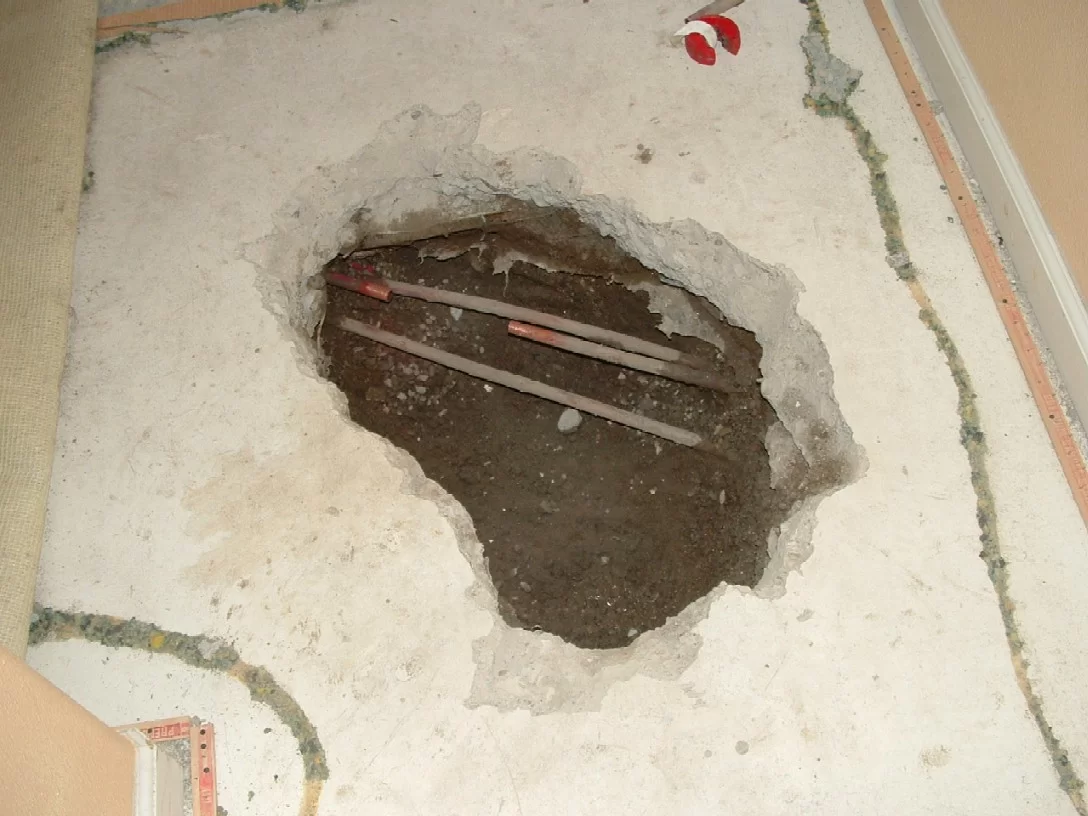
Why an intermittent slab leak can seem to disappear
Supply pressure changes throughout the day. A small opening may release more water when pressure rises and less when pressure falls. Hot-water branches also expand and contract as the heater cycles. A recirculation pump, timed irrigation, or pool autofill can add a separate pattern that looks like a concealed pipe failure.
The first goal is to separate true intermittent flow from incomplete observation. A digital or mechanical meter may move slowly enough that a short check misses it.
Meter timing matters
Choose a period with no intentional water use. Confirm toilets, ice makers, irrigation, softeners, and pool equipment are quiet. Record the meter reading and the leak indicator, then check again after a useful interval. The EPA WaterSense guidance describes comparing meter readings during a period without water use.
If the meter moves only after the water heater fires, a hot branch deserves attention. If it moves with irrigation active, the outdoor system may be the cause. Patterns help, but they are not a location.
Hot-side leaks can change with temperature
Copper and other piping materials expand as water heats and contract as they cool. A weak joint or worn section can respond differently across that cycle. A hot leak may also create warm flooring only after enough water has traveled under the slab.
Closing the cold-water inlet to the heater separates the hot distribution system. If unexplained meter movement stops, the hot side becomes the focus. In a two-heater home, each heater should be isolated separately.
Cold-side leaks may have no warm clue
An intermittent slab leak on the cold side can produce a bill increase or faint sound without a warm floor. Soil conditions may absorb the water, and finished flooring may hide dampness. Pressure testing and acoustic listening become more important when thermal imaging offers little contrast.
Why one negative test is not enough
A line can appear stable during a low-pressure period. The meter may also pause while an automatic valve is closed. A defensible conclusion uses repeated observations, controlled isolation, and a pressure test of the suspected branch. It should state when the symptom occurred and when it did not.
How to investigate an intermittent slab leak
- Write down the time and conditions when symptoms appear.
- Repeat meter checks with all automatic equipment identified.
- Separate hot-water and cold-water branches.
- Hold the suspected branch at controlled test pressure.
- Map temperature only where it adds useful evidence.
- Listen along the verified pipe route with acoustic equipment.
- Mark the strongest repeatable location and document limitations.
What a useful leak-location visit should document
A sound investigation separates observations from conclusions. The written findings should identify what was tested, what held, what did not, which access points were used, and what limited the work. Equipment such as pressure gauges, thermal imaging, acoustic listening devices, tracer tools, or electronic line locators should support a conclusion rather than replace one.
Lone Star Leak Locators serves homeowners in Plano, Allen, Frisco, Richardson, McKinney, and nearby North Dallas communities. The goal is to narrow the problem before repair access begins. Call or text 972-333-5448 if you need help deciding which test fits the evidence at your property.
Related resources
- Why one slab leak can create several warm areas
- Slab leak detection in North Dallas
- Slab leak or flooring moisture questions
- Explore Lone Star Leak Locators services
Frequently asked questions
Can a pipe leak only when hot water runs?
A weak hot-water branch may show more loss as temperature and pressure change. Controlled isolation is needed to confirm it.
Why did the meter stop during my second check?
Pressure may have changed, an automatic device may have stopped, or the flow may be too small for a brief observation.
Can a recirculation pump affect the pattern?
Yes. Timed or demand-controlled recirculation changes flow and temperature on the hot-water branch.
Will a thermal camera always find it?
No. Cold-side leaks and deeply distributed water may create little useful temperature contrast.
Can the leak be outside the slab?
Yes. Service lines, irrigation, hose connections, and exterior branches must be considered.
Should I wait until the symptom returns?
Active flooding or rapid loss needs immediate action. Otherwise, keep a dated log and arrange controlled testing rather than guessing.
Can acoustic listening work when the leak is quiet?
It may require steady test pressure and a quiet building. Very small leaks or difficult soil conditions can limit the signal.
What makes the location reliable?
Repeatable pressure loss, a verified pipe route, a consistent acoustic signal, and documented isolation provide stronger evidence together.
Schedule professional leak detection
Call or text 972-333-5448, or use the secure scheduling page below.