

High Water Bill in Plano, TX? How to Tell If You Have a Hidden Water Leak
Written by Steven Shipler, Texas Licensed Master Plumber and Responsible Master Plumber (RMP), Texas License #45825.
A suddenly high water bill in Plano, Texas can be frustrating because the problem is not always obvious. You may walk through the entire house and see no dripping faucet, no water on the floor, and no broken pipe — yet the water meter keeps showing usage.
That is when a hidden water leak becomes a real possibility.
The leak may be underneath the concrete slab, between the water meter and the house, underneath landscaping, inside a wall, near an irrigation connection, or somewhere else in the pressurized water system.
A high water bill does not automatically prove you have a slab leak. The first job is to determine whether water is actually moving through the meter when everything in the home should be turned off.
High Water Bill in Plano? Let’s Find Out Where the Water Is Going.
Professional slab, underground water, pool, and plumbing leak detection throughout Plano and North Dallas.
Call or Text: 972-333-5448Locate the leak before unnecessary concrete cutting, digging, or demolition.
Does a High Water Bill Mean You Have a Leak?
It can.
But increased water consumption can also come from irrigation, filling a swimming pool, additional household use, a running toilet, a dripping fixture, an automatic pool filler, or another appliance using water.
The important clue is whether water continues moving through your meter when you believe everything using water has been shut off.
The City of Plano currently provides utility customers with online tools to review their water use and specifically addresses high consumption and leaks through its Customer & Utility Services system.
What I Look at First on a High-Water-Bill Call
When I arrive at a property because the homeowner has a high water bill, I do not want to start by guessing where the pipe is broken.
I want to answer a simpler question first:
Is the plumbing system actually losing water right now?
That one answer determines what we do next. If the meter shows continuous consumption with everything shut off, we can begin isolating the system and narrowing the leak. If the meter is not moving, we have to look at intermittent water use such as irrigation, toilets, pool equipment, or other fixtures.
Step 1: Check Your Plano Water Meter
One of the simplest homeowner tests is also one of the most useful.
- Turn off faucets throughout the house.
- Make sure nobody is showering or using sinks.
- Do not run the washing machine or dishwasher.
- Turn off irrigation temporarily.
- Make sure toilets are not actively filling.
- Check whether the pool autofill is running.
- Locate your water meter.
- Record the meter reading or photograph it.
- Wait without intentionally using water.
- Check the meter again.
If the meter continues registering water use when everything should be off, there is a strong reason to investigate further.
National WaterSense guidance also recommends comparing water use and checking the meter during a period when no water is intentionally being used. A meter reading that changes during a no-use period can be an important sign of a leak.
10 Signs Your High Water Bill Could Be a Hidden Leak
- The water meter moves when everything is turned off.
- Your water bill suddenly increases without a change in normal usage.
- You hear water running when no fixture is operating.
- A section of flooring feels unusually warm.
- Flooring, baseboards, or walls become damp.
- You notice unexplained moisture near the foundation.
- One area of the yard stays unusually wet.
- You notice reduced water pressure.
- The water heater appears to run more frequently than normal.
- You repeatedly add water to a pool without an obvious explanation.
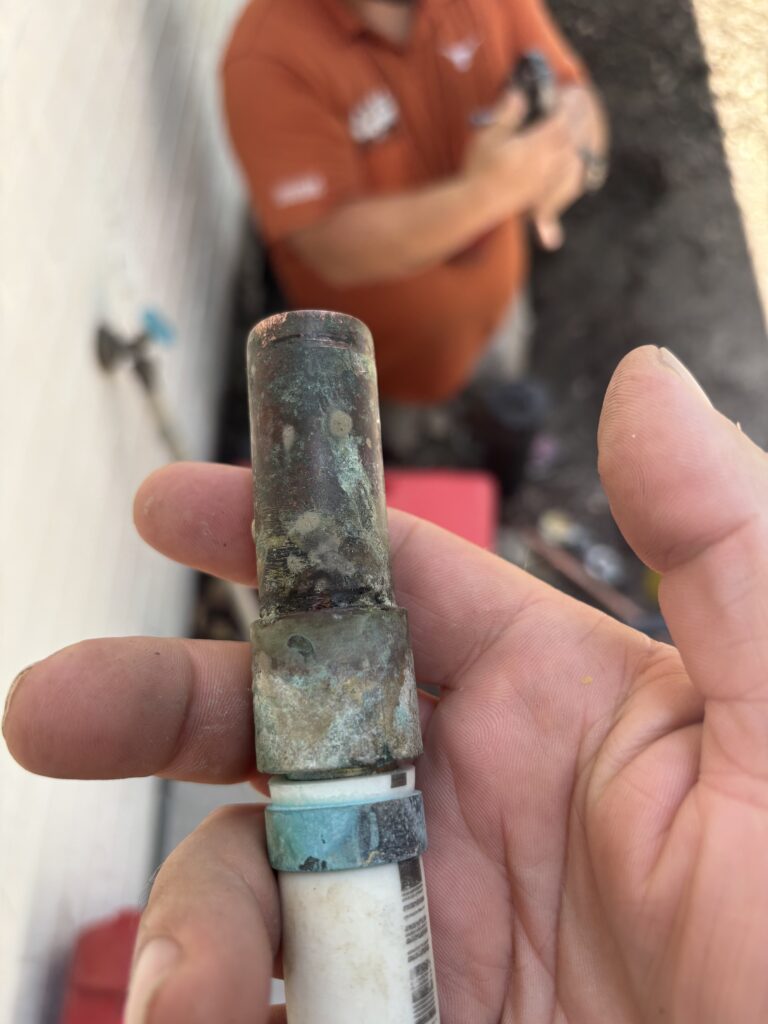
Professional leak detection helps narrow the repair area before unnecessary excavation or concrete cutting.
Common Causes of a High Water Bill in Plano
1. Running Toilet
A toilet can quietly leak water from the tank into the bowl for hours or days without creating water on the floor. A worn flapper, fill valve, or other internal component can create continuous consumption.
2. Irrigation System Leak
Sprinkler systems can leak underground. Because the water disappears into soil, the homeowner may not immediately realize how much water is being lost.
3. Underground Water Service Leak
The water service line running from the meter toward the house can develop a leak underground.
The yard may become wet, but not always. Soil conditions can allow water to travel underground before becoming visible.
4. Slab Leak
A pressurized hot or cold water line underneath the concrete foundation can develop a leak.
Depending on where the pipe fails, you may notice a warm floor, water near baseboards, sounds of running water, meter movement, or simply a high bill.
5. Pool Autofill or Pool Plumbing
An automatic pool filler can hide pool water loss because it continuously replaces escaping water.
The homeowner may notice the problem first on the monthly water bill instead of by seeing the pool level drop.
6. Exterior Hose Bib or Plumbing Leak
Outdoor fixtures, hose connections, valves, and buried piping can leak without causing visible damage inside the house.
7. Water Softener or Plumbing Equipment
Water treatment equipment and other water-using systems can occasionally malfunction or cycle more than expected.
Could Your High Water Bill Be a Slab Leak?
Yes, but a high bill by itself is not enough evidence to start cutting concrete.
A slab leak is a leak in a water line located beneath or within the concrete foundation.
Water can move underneath the slab and appear several feet away from the actual pipe failure.
The wet spot is not always the leak location. Water underneath a slab can travel before it becomes visible.
Hot Water Slab Leak vs. Cold Water Slab Leak
A hot-water line leak may sometimes create a warm area on the floor because heated water is escaping beneath the slab.
A cold-water leak may be harder to notice from temperature alone.
Either one can increase the water bill because the water meter measures water entering the property regardless of where the pipe eventually loses it.
How We Narrow Down a Hidden Water Leak
Professional leak detection works best as a process of elimination.
Step 1: Confirm Water Loss
Determine whether the meter or pressurized plumbing system indicates active water loss.
Step 2: Isolate the Plumbing
Separate different portions of the system when possible to determine which line or section is losing water.
Step 3: Trace the Suspected Line
Understanding where the water line travels through the home helps reduce the possible leak area.
Step 4: Listen Electronically
Acoustic leak detection equipment can help identify sounds created by pressurized water escaping from a damaged pipe.
Step 5: Narrow the Repair Area
The objective is to give the repair contractor a targeted starting location instead of randomly cutting concrete or digging.
Leak Detection Equipment Used to Find Hidden Water Leaks
There is no single tool that finds every leak. The equipment has to match the type of pipe, surface, leak, and property conditions.
1. Professional Ground Microphone / Geophone System
A ground sensor or geophone listens for sound produced by pressurized water escaping from a pipe beneath concrete, tile, pavement, or another surface.
2. General Wire Gen-Ear LE Water Leak Location System
The General Wire Gen-Ear LE is designed for acoustic water leak location. Its ground sensor and amplified listening system can be used to help pinpoint leaks in residential and commercial water lines, including piping beneath concrete slabs.
3. Pressure Gauges and System Isolation Equipment
Pressure testing and isolation help determine whether a section of plumbing is actually losing pressure before acoustic locating begins.
This is important because listening in the wrong area or on the wrong plumbing circuit wastes time and can lead to bad conclusions.
You Receive a Certified Master Plumber Report
This is an important difference.
After your professional leak detection, you receive a written Master Plumber Report documenting the inspection and findings.
The report is prepared by a Texas Licensed Master Plumber and Responsible Master Plumber.
Texas Master Plumber / RMP License #45825
The report can document what was tested, the diagnostic findings, the suspected leaking plumbing section, the approximate repair area when a location can be established, and the recommended next step.
That gives the homeowner something much more useful than simply being told, “We think the leak is somewhere over here.”
Why the Master Plumber Report Matters
Hidden water leaks can lead to expensive repair decisions.
You may be considering cutting flooring, opening concrete, tunneling beneath a foundation, excavating the yard, rerouting a water line, or replacing part of the plumbing system.
Before making that decision, you should understand what evidence led to the recommended repair.
- What system was tested?
- Did the system lose pressure?
- Was the suspected line isolated?
- Where does the line appear to travel?
- Where was the strongest leak evidence detected?
- What area should the repair contractor investigate first?
How Much Does Leak Location Cost in Plano, Texas?
Leak locating prices can vary widely depending on the type of leak and the amount of diagnostic work required.
Plano Leak Detection Planning Range
Starting at $339
The wide range reflects the difference between a relatively simple leak investigation and complicated properties involving multiple systems, pool plumbing, difficult access, several suspected leaks, or extended diagnostic work.
Leak detection starts at $339 for the first two hours on site, and additional time is $175 per hour.
Do Not Start Breaking Concrete Just Because the Water Bill Is High
A high water bill tells you water use increased.
It does not tell you where the water went.
The leak could be:
- Under the slab
- In the front yard
- At the irrigation system
- At a toilet
- At a hose bib
- At the pool
- At the pool autofill
- Inside a wall
- At an appliance
- Between the meter and the home
Diagnose first.
Then repair.
Hidden Water Leaks in Plano, Allen, and Frisco
We perform this type of diagnostic work throughout Plano and the surrounding North Dallas area.
A homeowner in Plano may first notice a high utility bill or unexplained meter movement.
A homeowner in Allen may notice moisture near the foundation or an unusually wet section of the yard.
A homeowner in Frisco may see the same symptoms even though no water is visible inside the home.
The city changes, but the diagnostic principle does not:
Confirm the water loss, isolate the system, and locate the problem before unnecessary demolition.
Leak Detection Service Area: Plano, Texas
More Plano Leak Detection Resources
Professional Leak Detection in Plano, TX
Slab, pool, underground water, and gas leak detection services for Plano homeowners.
View Plano Leak Detection →
Plano Leak Detection Resource Center
Read our Plano homeowner guides covering slab leaks, pool leaks, hidden water leaks, gas leaks, and diagnostic testing.
Visit Plano Resources →
Lone Star Leak Locators
Professional leak detection throughout Plano and the North Dallas area.
Visit Home Page →
“Lone Star Leak Locators did a thorough job testing the system and explaining each step. They found the leaking section without unnecessary demolition and gave me a clear written report. Very professional from start to finish.”
“The technician arrived prepared, pressure-tested the lines, and used electronic listening equipment to narrow down the leak. Communication was excellent, and I appreciated how carefully everything was documented.”
“I had no idea where the water was coming from, but Lone Star Leak Locators methodically isolated the plumbing and identified the likely repair area. The process was organized, professional, and saved us from guessing.”
“Great leak detection service. They took the time to test the plumbing properly instead of rushing to a conclusion. The findings were clearly explained, and the Master Plumber report made it easy to understand the next steps.”
“Lone Star Leak Locators was responsive, knowledgeable, and very detailed. They located the problem, explained the testing results, and gave us confidence about where the repair needed to be made. Highly recommended.”
Stop Guessing About Your High Water Bill
If your Plano water meter keeps moving and you cannot find the source, professional leak detection can help narrow the problem before you start cutting concrete or digging.
Call Lone Star Leak Locators: 972-333-5448Texas Master Plumber / Responsible Master Plumber #45825
Schedule Online
Choose an available appointment time below.
Frequently Asked Questions About High Water Bills and Hidden Leaks
1. Why did my Plano water bill suddenly increase?
Possible causes include increased irrigation, a running toilet, pool water use, a plumbing fixture leak, underground service-line leak, slab leak, or another source of unexpected water consumption.
2. How can I tell if my house has a hidden water leak?
Turn off known water use and monitor the water meter. Continued meter movement during a no-use period can indicate that water is escaping somewhere in the system.
3. Does a high water bill automatically mean I have a slab leak?
No. Toilets, irrigation, pool systems, exterior piping, service lines, appliances, and fixtures can also cause increased water consumption.
4. Will my water meter move if I have a leak?
An active leak on the metered plumbing system can cause the meter to register consumption even when you are not intentionally using water.
5. How much does leak detection cost in Plano?
Leak detection starts at $339 for the first two hours on site, and additional time is $175 per hour.
6. Can a plumber locate a water leak without breaking the concrete?
Professional testing can often narrow the suspected leak area using pressure testing, isolation, tracing, and acoustic equipment before concrete is opened.
7. What does a slab leak sound like?
Pressurized water escaping from a pipe can create hissing, rushing, hammering, or other acoustic signatures, but the sound varies with pressure, pipe material, soil, concrete, and leak size.
8. Can an irrigation leak cause a very high water bill?
Yes. Underground irrigation leaks or valves that do not shut off properly can waste substantial amounts of water without creating an obvious indoor symptom.
9. Can my swimming pool cause my household water bill to increase?
Yes. Pool filling, automatic water-level systems, plumbing leaks, equipment leaks, and frequent backwashing can increase water consumption.
10. Can a running toilet really increase my water bill?
Yes. A toilet can continually pass water from the tank into the bowl without leaking onto the floor, making it easy to overlook.
11. Where can an underground water line leak?
Leaks may occur between the city meter and the home, beneath landscaping, beneath a driveway or sidewalk, near the foundation, or beneath the slab.
12. Should I start cutting concrete if I think I have a slab leak?
Generally, it is better to locate and narrow the suspected failure area before destructive access begins.
13. Will I receive a written report after leak detection?
Yes. Lone Star Leak Locators provides a Master Plumber Report documenting the diagnostic work and findings. The report is prepared by a Texas Licensed Master Plumber and Responsible Master Plumber, License #45825.
14. Can leak detection guarantee the exact location of every hidden leak?
No diagnostic method can guarantee that every concealed leak will behave identically. Pipe material, depth, soil, pressure, ambient noise, access, and leak size can all affect the ability to pinpoint a leak. The objective is to narrow the location using multiple pieces of evidence.
15. Who should I call for hidden water leak detection in Plano?
Lone Star Leak Locators provides professional slab, water, pool, and gas leak detection throughout Plano and North Dallas. Call or text 972-333-5448.
Plumbing Code Reference Topics
Water-line repair and replacement should be evaluated under the plumbing code adopted by the local authority having jurisdiction. Always verify current City of Plano requirements before beginning regulated plumbing work.
| # | Reference | Why It Matters |
|---|---|---|
| 1 | International Plumbing Code — Water Supply and Distribution | Covers water service piping, water distribution systems, materials, installation, protection, and related water-supply requirements. |
| 2 | Uniform Plumbing Code — Water Supply and Distribution | Provides water-supply and distribution requirements used as an additional industry reference when evaluating plumbing installation and repair principles. |
Reference & Fact-Check Sources
These references support the water-use, leak-detection, licensing, equipment, and plumbing-system information discussed in this article. External URLs are intentionally not included.
| # | Reference | Why It Matters |
|---|---|---|
| 1 | City of Plano Customer & Utility Services | Plano utility information includes water-use tracking and high-consumption and leak resources. |
| 2 | U.S. EPA WaterSense — Home Maintenance | Provides homeowner guidance for comparing water use and checking water meters for possible leaks. |
| 3 | U.S. EPA WaterSense — Fix a Leak Week | Provides consumer education about household water leaks, meter checks, toilets, faucets, and water waste. |
| 4 | U.S. EPA — Leak Detection and Flow Monitoring Devices | Explains how flow monitoring and moisture detection can identify abnormal water-use patterns. |
| 5 | Texas State Board of Plumbing Examiners | Texas agency responsible for plumbing licenses, registrations, and professional oversight. |
| 6 | TSBPE — Responsible Master Plumber | Defines the RMP designation and responsibility for supervision and management of plumbing work. |
| 7 | General Pipe Cleaners — Gen-Ear LE | Manufacturer information for professional acoustic water-leak locating equipment and ground sensors. |
| 8 | International Plumbing Code | Industry reference for potable-water service, distribution, materials, installation, and plumbing-system requirements. |
| 9 | Uniform Plumbing Code | Industry plumbing reference addressing potable-water supply and distribution systems. |
| 10 | Lone Star Leak Locators Field Diagnostic Practices | Supports the practical isolation, pressure-testing, acoustic detection, and targeted repair process described in the article. |
Leak Detection Search Topics
| Priority | Keyword |
|---|---|
| 1 | leak detection near me |
| 2 | slab leak detection |
| 3 | water leak detection |
| 4 | pool leak detection |
| 5 | gas leak detection |
| 6 | slab leak repair |
| 7 | slab leak detection near me |
| 8 | water leak detection near me |
| 9 | pool leak detection near me |
| 10 | gas leak detection near me |
| 11 | underground water leak detection |
| 12 | leak detection company |
| 13 | leak detection service |
| 14 | water leak under slab |
| 15 | slab leak location |
| 16 | water leak location |
| 17 | gas leak locating |
| 18 | natural gas leak detection |
| 19 | swimming pool leak detection |
| 20 | pool losing water |
| 21 | hidden water leak detection |
| 22 | plumbing leak detection |
| 23 | leak locator near me |
| 24 | acoustic leak detection |
| 25 | electronic leak detection |
High Water Bill in Plano? Find the Leak Before It Gets More Expensive.
Lone Star Leak Locators provides professional slab, underground water, pool, and gas leak detection throughout Plano and North Dallas.
You receive a written Master Plumber Report prepared by a Texas Licensed Master Plumber / RMP.
Texas License #45825
Call or Text 972-333-5448Locate First. Repair Second.