

A soap bubble gas leak test can help a qualified professional check an accessible fitting under controlled conditions. It is not a complete whole-house diagnosis, and it is not a safe homeowner substitute for emergency response. If you suspect a gas leak, leave immediately and call 911 and the gas utility from a safe location.
The goal is to identify the source before destructive access or repair. Lone Star Leak Locators documents the test scope, supported findings, and important limitations so the next decision is based on evidence.
Emergency guidance comes before diagnosis
Atmos Energy tells customers to leave the area immediately if they suspect a natural gas leak. From a safe distance, call 911 and the utility’s emergency number, 866-322-8667. Do not use switches, phones, vehicles, or anything else that could create a spark near the suspected leak.
Never stay inside to look for bubbles. Also, do not rely on smell, a silent carbon monoxide alarm, or an online appointment. Instead, let emergency responders and the utility address the immediate hazard first.
What bubble solution can and cannot show
When a trained professional applies approved leak-detection solution to an accessible, pressurized connection, growing bubbles can indicate escaping gas at that exact surface. For example, the method can help check exposed joints, valves, and appliance connections within an appropriate test plan.
However, a negative result at one fitting does not clear concealed piping, buried lines, inaccessible joints, other appliances, or the rest of the system. In addition, product choice, surface condition, pressure, access, and technique affect the observation.
Why pressure testing and electronic detection may be needed
A gas diagnostic may include visual inspection, an approved pressure test, electronic detection, isolation, or other procedures based on the utility notice and local requirements. However, each method has a defined scope.
Therefore, the professional should document test conditions and the portion evaluated. A test that covers one appliance connector does not prove that customer-side piping elsewhere is sound.
What happens after the utility shuts service off
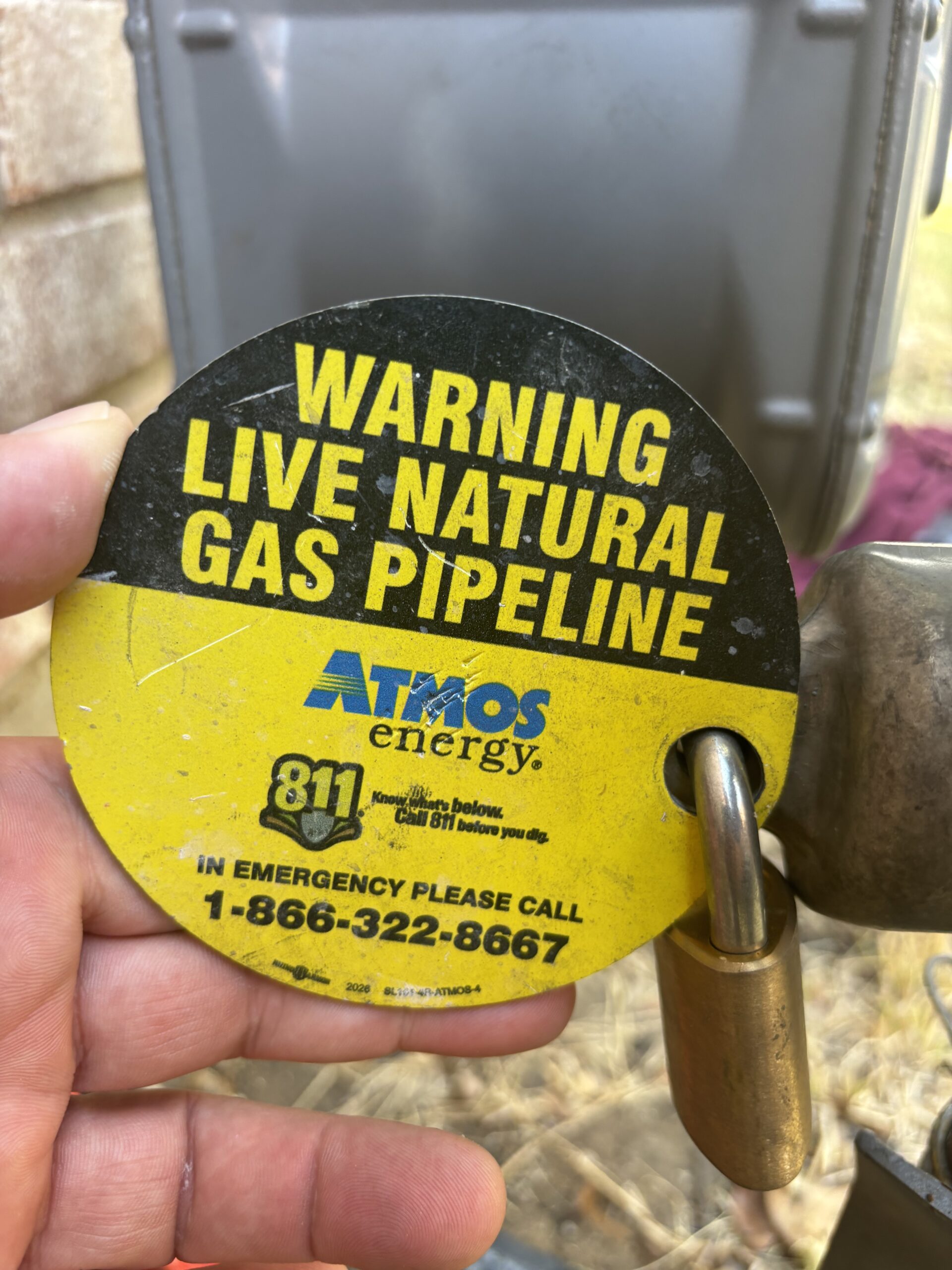
Do not remove a utility lock or restore service yourself. Instead, keep the utility notice and give it to the licensed repair professional. Required repair, permit, inspection, and reconnection steps depend on the utility and local jurisdiction.
After emergency conditions are resolved, Lone Star Leak Locators can discuss customer-side diagnostic work. In this situation, the purpose is to identify supported findings after emergency response.
Helpful resources
Frequently asked questions about soap bubble gas leak test
Can I use dish soap to check a suspected gas leak?
No. Leave the area and call emergency services and the gas utility from a safe location. Do not remain near a suspected leak to perform a test.
Does no bubbling prove the line is safe?
No. It only means that the checked surface did not show bubbles under those conditions. However, other locations or concealed piping may remain untested.
Can a carbon monoxide alarm replace gas-leak testing?
No. Carbon monoxide and escaping natural gas are different hazards. A quiet CO alarm does not clear a suspected fuel-gas leak.
Can a bubble test find an underground leak?
It cannot check a buried pipe surface that is not exposed. Instead, professionals use an appropriate diagnostic plan for concealed or underground piping.
Who can restore service after a utility lockout?
Follow the utility and local jurisdiction’s process. Do not remove locks or operate utility equipment yourself.
What records should I keep?
Keep the utility notice, emergency report, repair invoice, permit or inspection documentation, and the final diagnostic findings.
Schedule professional leak detection
Call Lone Star Leak Locators to discuss the symptoms and confirm the right diagnostic scope for your North Texas property.