

Gas Odor Outside Near the Meter Safety Guide
A gas odor outside near the meter is an emergency warning, not a do-it-yourself inspection. Leave the area, call 911 and the gas utility from a safe location, and wait for official instructions. Routine testing comes only after the emergency response controls the hazard.
Smell gas now? Leave first
Do not investigate the meter, operate switches, start a vehicle nearby, use a flame, or use a phone in the suspected area. Leave the area immediately. From a safe location, call 911 and your gas utility’s emergency number. Follow the utility and fire department’s directions before returning.
The Texas Railroad Commission’s gas-leak safety notice says to leave immediately when natural gas is smelled and not to turn on lights or appliances or use a telephone in the affected area.
Why an outdoor odor still needs an emergency response
A gas odor outside near the meter can come from utility equipment, customer-owned piping, a regulator vent, nearby work, or another source. Wind can also move odor away from its origin. A homeowner cannot safely determine ownership or severity by smell alone.
Therefore, the first call is not a routine leak-detection appointment. The emergency utility response must make the area safe and identify the next authorized step.
Do not touch the meter or regulator
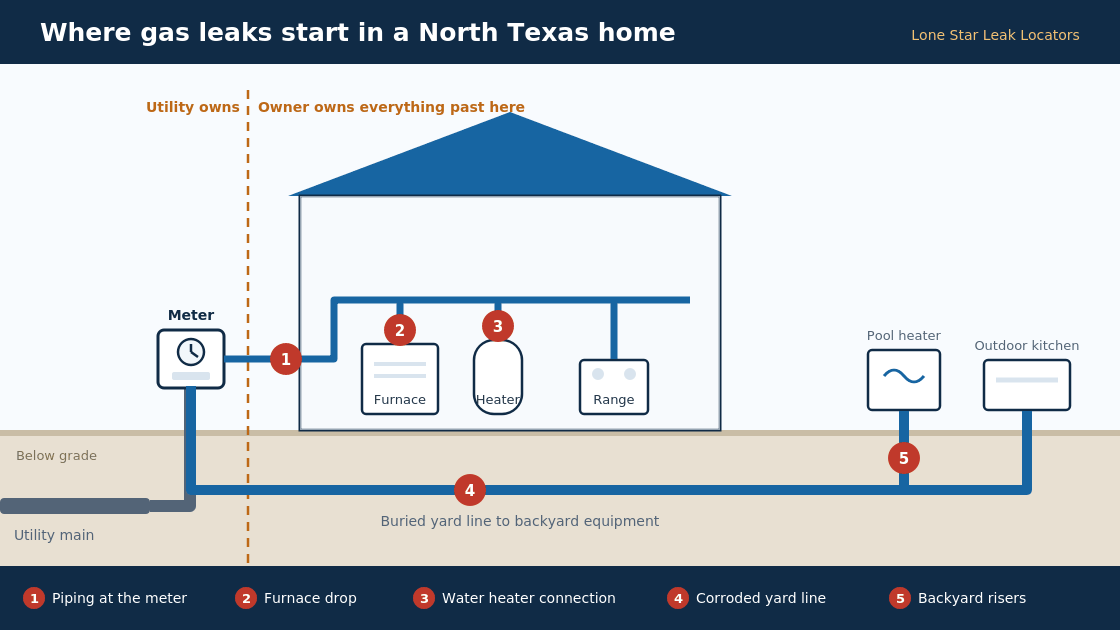
Do not tighten fittings, cover a regulator vent, move the meter, or test with soap solution while gas is suspected. Utility equipment and customer piping meet at a defined service point, but the utility must determine what it owns and what actions are allowed. Even an outdoor release can migrate into a building or confined space.
If service is shut off, leave it off. Only the utility or an authorized professional should restore service under local requirements.
What happens after the emergency is controlled?
The utility may document whether the concern is on utility-owned equipment or customer-owned piping. If customer piping needs further work, a qualified plumbing professional can isolate branches, perform an appropriate pressure test, and document the tested scope. The result should state exactly what was included and excluded.
That distinction matters because a passing test on one isolated section does not clear every appliance connector, valve, vent, meter component, or untested branch. Our article on a gas odor that returns after a pressure test explains how to read the scope.
Information to record only after officials say it is safe
- Where and when you first noticed the odor
- Whether the odor was indoors, outdoors, or both
- Weather and wind direction
- Utility or fire-department instructions
- Any tag, shutoff notice, or written scope
Do not remain in the area to collect these details. Safety takes priority over documentation.
Restoration is different from detection
Leak detection narrows the source. Repair corrects the defect. Inspection or documentation may confirm the work. Finally, the utility controls its own restoration process. These steps can involve different parties, and a detection appointment does not override an active emergency or utility lockout.
For background on the service sequence, see our North Texas guide to gas leak detection and utility restoration. In an active odor situation, always use emergency channels first.
Frequently asked questions
Should I call a leak locator before the gas utility?
No. For a current odor or suspected release, leave and call 911 and the gas utility from a safe location.
Is a faint outdoor odor less urgent?
No. Odor strength can change with wind and distance. Treat any unexplained gas odor as an emergency.
Can I check the meter with soapy water?
Do not approach or test suspected gas equipment during an active odor. Let the utility and emergency responders assess it.
Can I shut off the meter myself?
Follow the utility’s emergency instructions. Do not operate meter equipment unless the utility or emergency authority specifically directs you.
What if the odor disappears before help arrives?
Stay in the safe location and report what happened. A changing odor does not prove the source is gone.
Does an outdoor leak stay outdoors?
Not necessarily. Gas can move with air, soil pathways, and openings. That is why evacuation and utility response come first.
Who decides when service can be restored?
The gas utility controls its restoration process and may require specific repair or inspection documentation.
When is routine leak detection appropriate?
After the emergency is controlled and the utility or authority directs you to have customer-owned piping tested or located.
Schedule targeted leak detection
For a careful, non-destructive diagnostic plan in Plano, Allen, Frisco, McKinney, Richardson, and nearby North Dallas communities, call Lone Star Leak Locators at 972-333-5448.